Looking for the best proxy services in 2026 but overwhelmed by the options?
The right proxy depends on your use case, whether it’s web scraping, bypassing geo-restrictions, or privacy.
This guide breaks down the top 7 proxy providers by features, IP pool size, and pricing, so you can choose with confidence.
List of the Best Proxy Services in 2026
Here’s a look at the best proxy providers currently available and what sets each one apart.
1. Bright Data
Bright Data tops the list for enterprise-grade scraping. It offers residential, datacenter, ISP, and mobile proxies.
Main Features:
- Multiple proxy types under one roof
- 1,300,000+ datacenter IPs
- Over 150 million+ ethical residential IPs from 195 countries.
- Over 1,300,000+ fully-compliant static residential proxies (ISP proxies).
- 7M+ mobile IPs from 195 countries.
- Handles projects of all sizes and complexities
Pricing:
Pricing is on the higher end but scales with your plan:
- Residential Proxies: From $4/GB
- Datacenter Proxies: From $0.42/GB
- ISP Proxies: From $8/GB
- Mobile Proxies: From $8/GB
2. Smartproxy
Smartproxy is the go-to for teams that need solid performance without a heavy price tag. It covers residential, static residential, and mobile proxies, with built-in support for Chrome and Firefox extensions.
Main Features:
- 100M+ residential IPs
- Multiple proxy types available
- Competitive, beginner-friendly pricing
- Browser extension support for Chrome and Firefox
- Optimized for AI/LLM data pipelines and automation workflows
Pricing:
- Residential Proxies: From $0.90/GB
- Static Residential (ISP) Proxies: From $0.80/GB
3. NetNut
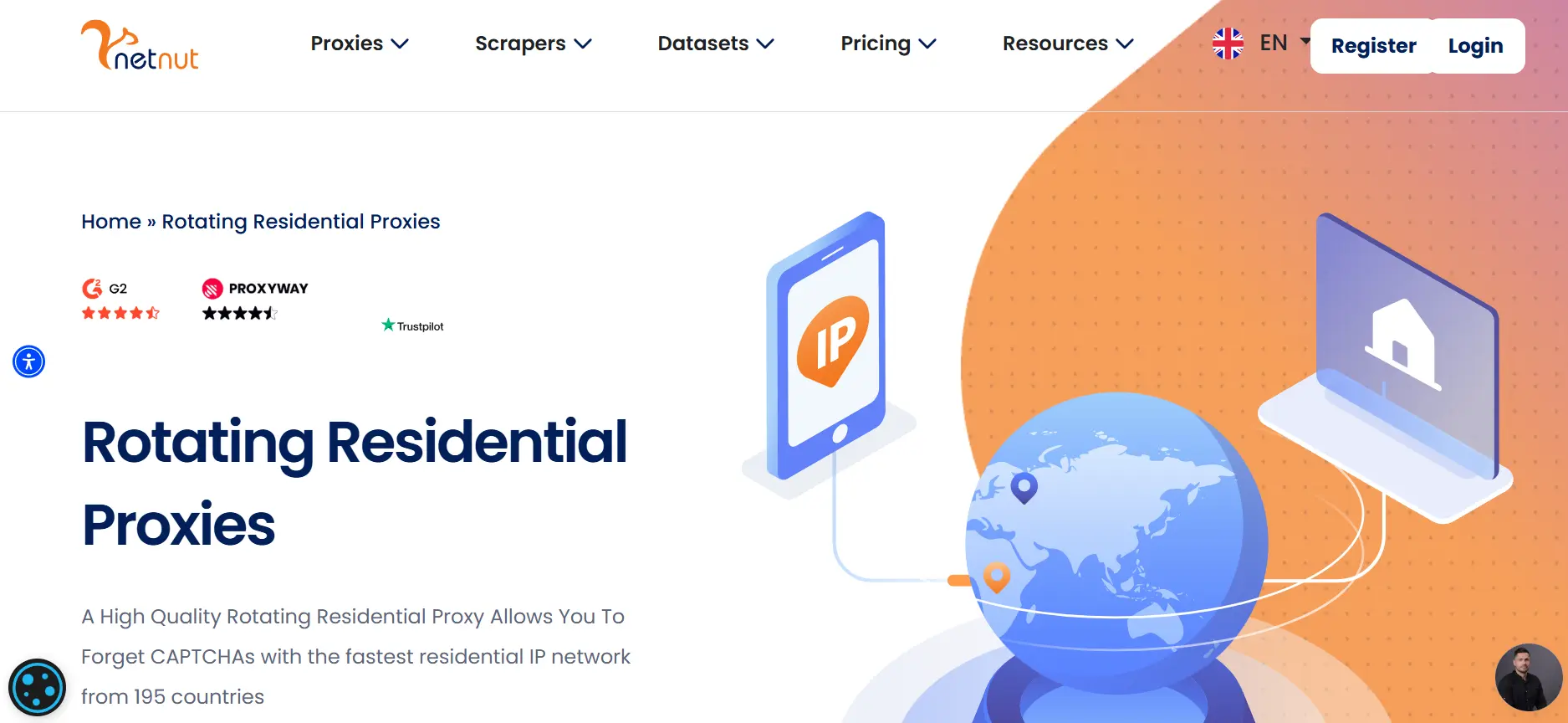
NetNut is built for reliability, offering rotating residential, static residential, mobile, and datacenter proxies. It covers 195 countries and supports HTTP, HTTPS, and SOCKS5 protocols.
Main Features:
- 85+ million residential IPs across 195 countries
- 1M+ Static IPs, 24/7 IP Availability
- Rotating/Static IPs, 99.99% Uptime
- Granular geo-targeting down to the city and state level
- Compatible with HTTP, HTTPS, and SOCKS5
Pricing:
- Rotating Residential Proxies: $99/month for 28 GB
- Static Residential Proxies: $99/month for 14.4 GB
- Datacenter Proxies: $100/month for 100 GB
4. Shifter
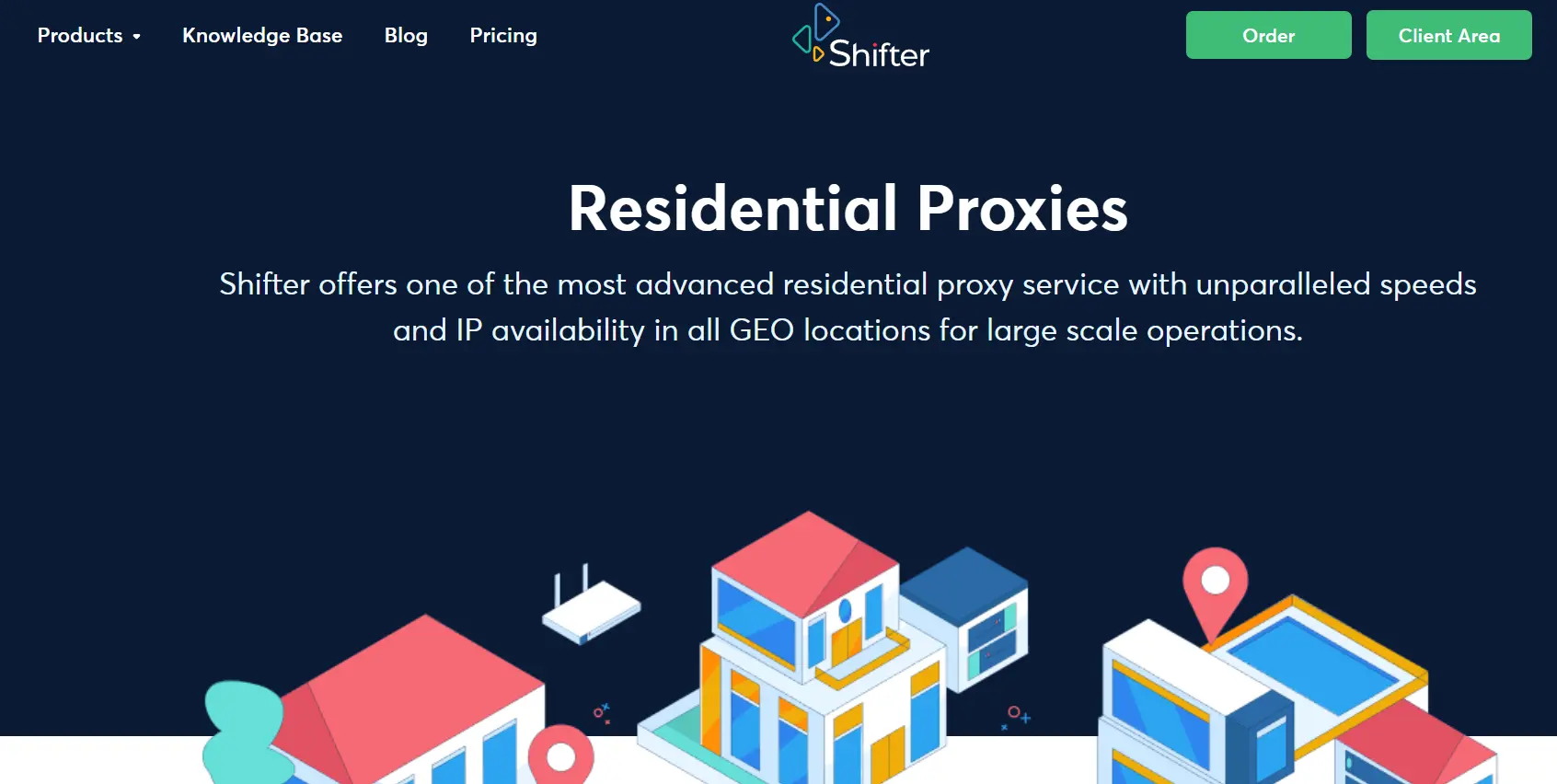
Shifter focuses on uptime and ease of use, making it a dependable choice for consistent scraping jobs or privacy-focused tasks.
Main Features:
- Over 50M+ IPs
- 99.99% network uptime
- Ultra Low Latencies
- Strong privacy and security measures
- 24/7 customer support
Pricing:
- Special Rotating Residential Proxies: $199.99/200 GB
- Basic Residential Proxies: $ 99.98/200 GB
5. Webshare
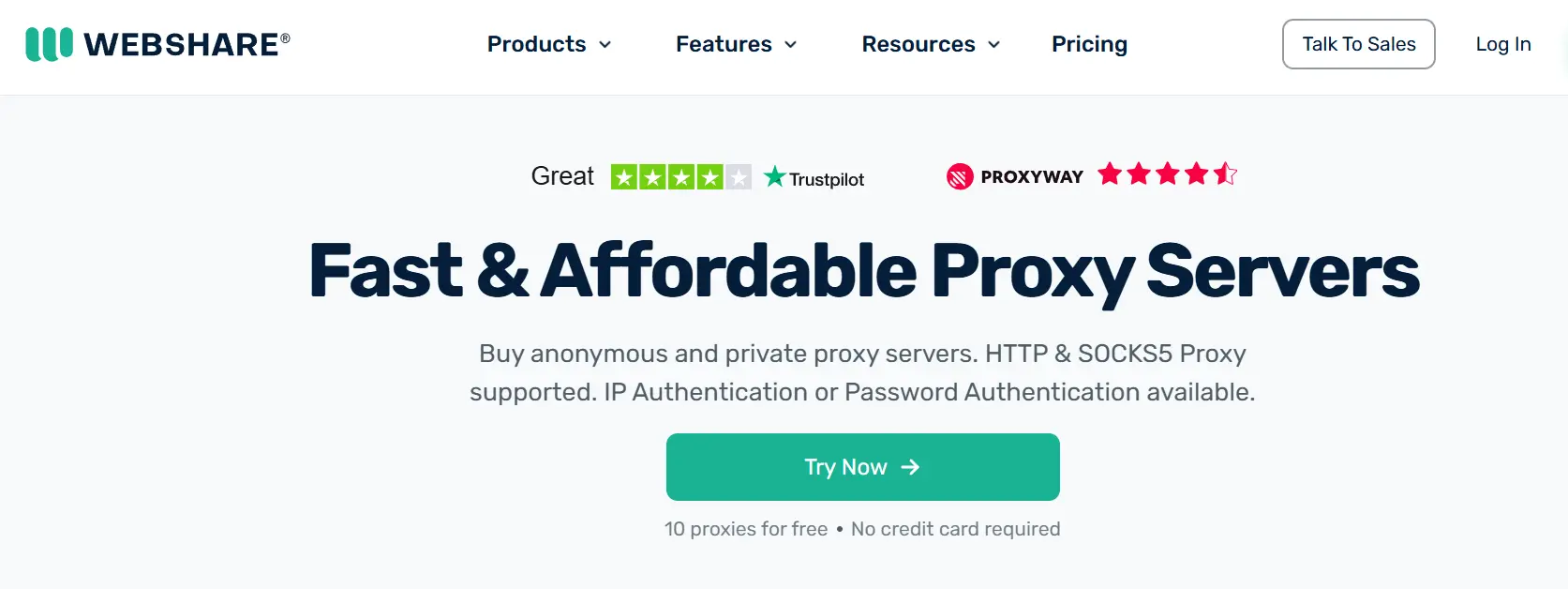
Webshare stands out for one big reason: it offers a genuinely useful free tier — 10 free proxies. It’s a great starting point for developers testing proxy workflows.
Main Features
- Free plan with 10 proxies
- Fast, reliable connections
- 500K+ Datacenter/ISP
- 80M+ Residential Proxies.
- HTTP and SOCKS5 support in 20+ countries
Pricing:
- Static Residential: $6/month for 20 proxies
- Residential Proxies: $3.50/month for 1 GB
6. Rayobyte
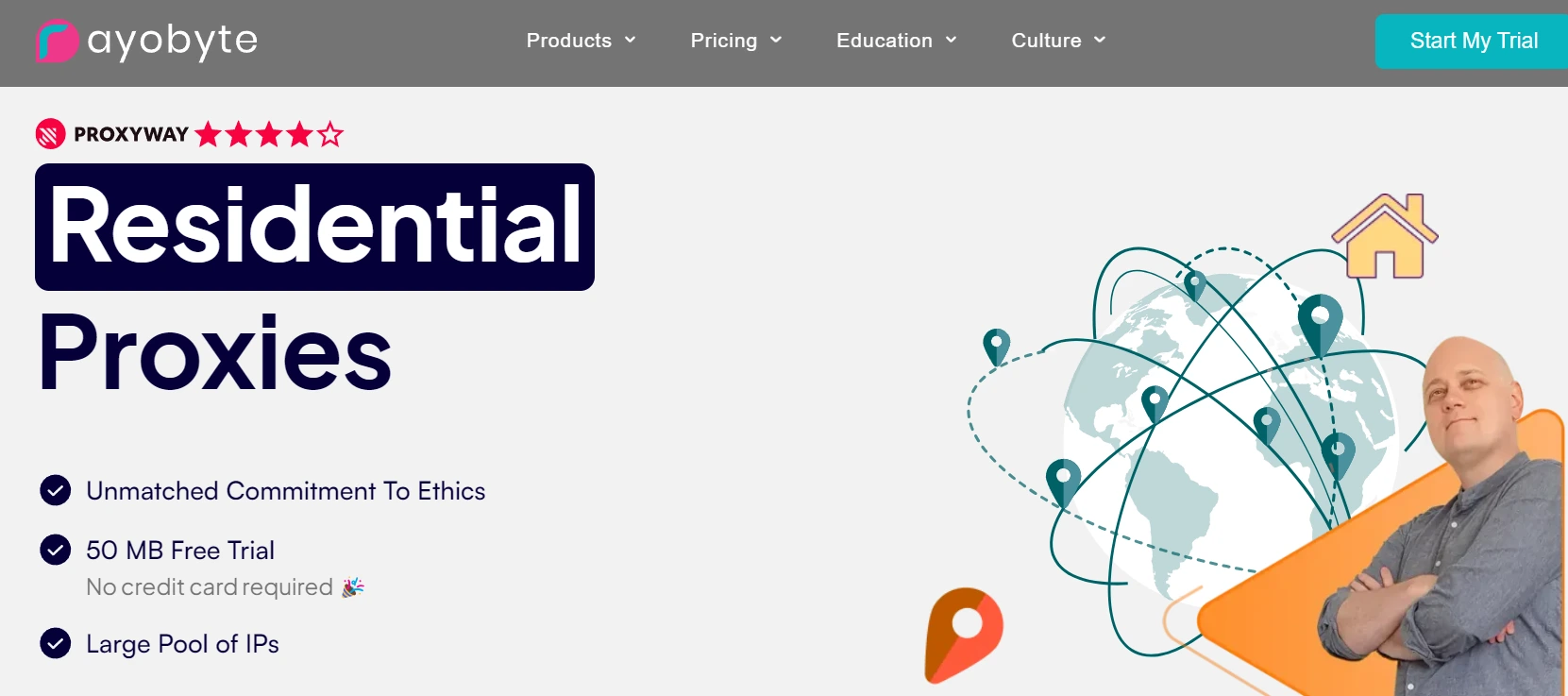
Rayobyte keeps things straightforward with affordable pricing and unlimited bandwidth — a combination that’s hard to beat for high-volume scraping.
Main Features:
- Residential, mobile, and datacenter proxy types
- Unlimited bandwidth included
- Budget-friendly across all tiers
Pricing:
- Residential Proxy: $0.50/GB
- Static ISP Proxy: $4.60/IP
- Static Datacenter IP: $1/IP
7. HomeIP
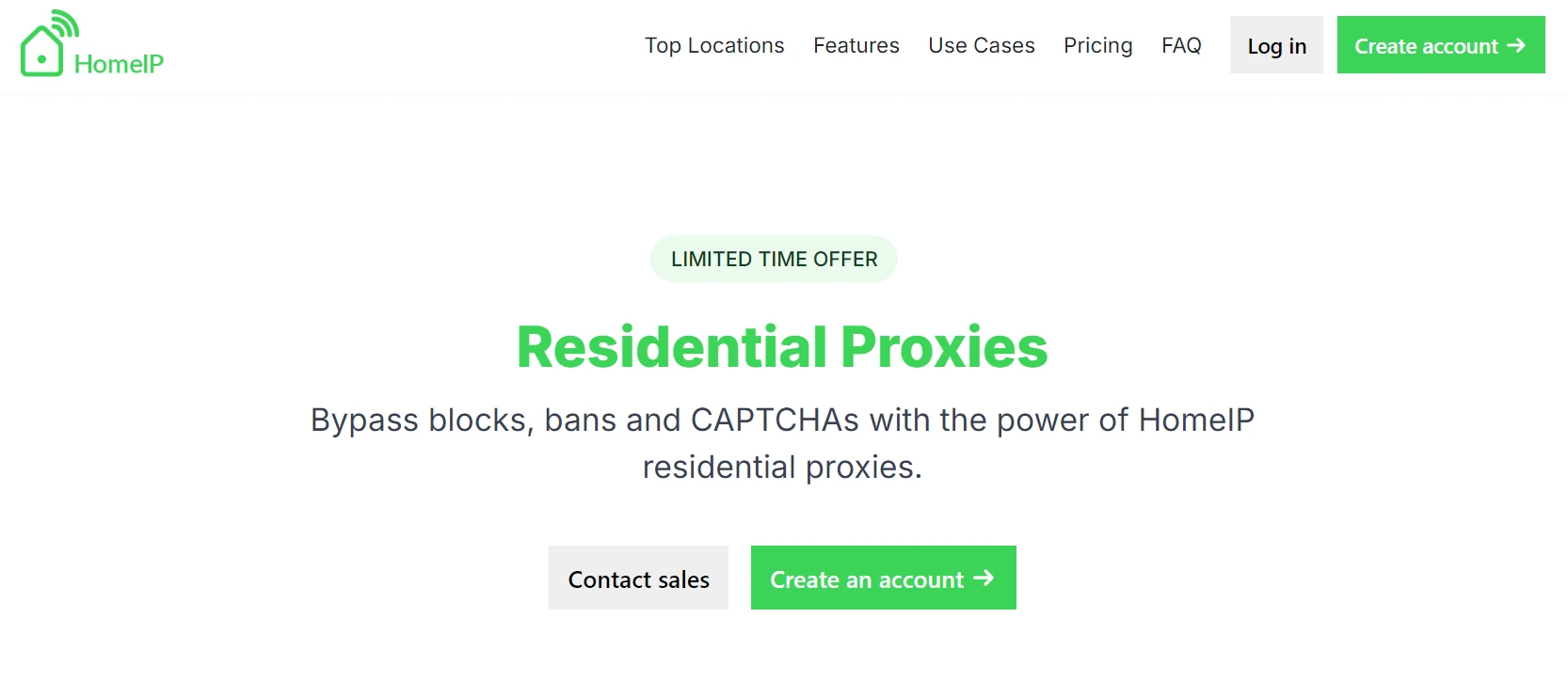
HomeIP focuses on bypassing blocks, bans, and CAPTCHA using residential IPs. Concurrent sessions are included at no extra cost, making it useful for scraping at scale.
Main Features:
- 50 million IPs across multiple countries
- 99.9% network uptime with live status monitoring
- Concurrent sessions at no additional charge
Pricing:
- Pay-as-you-go: From $7/GB
- Monthly plan: From $135/month
What We’ve Noticed in 2026
Proxy infrastructure has evolved noticeably over the past year. One of the most significant shifts is how AI-assisted session management is becoming standard rather than optional. Providers like Bright Data have started integrating scraping browser technology that automatically handles JavaScript rendering, CAPTCHA solving, and header rotation — capabilities that used to require separate tools.
Another trend worth noting: several providers, including NetNut and Rayobyte, have started offering ethically sourced IP certification, a direct response to growing legal scrutiny around how residential IP pools are assembled. If you’re operating in regulated industries, this is becoming an important procurement checkbox, not just a marketing claim.
For teams running large-scale scraping pipelines in 2026, the advice is simple: proxy selection alone is rarely enough. The real performance gains come from pairing the right proxy type with smart request throttling, session persistence logic, and, increasingly, AI-driven retry mechanisms that adapt to target-site behavior in real time.
Factors to Consider When Choosing a Proxy Service
Before you commit to a provider, run through these considerations:
Purpose: Know whether you need a proxy for privacy, security, data collection, or bypassing geo-restrictions. That single decision significantly narrows your options.
Proxy Type: Residential proxies are harder to detect but more expensive. Datacenter proxies are fast and cheap, but easier to block. Mobile proxies are the most realistic but the priciest. ISP proxies sit somewhere in between.
IP Pool Size and Geographic Diversity: A larger pool reduces the risk of IP bans. Geographic spread matters if you’re accessing region-locked content.
Uptime and Reliability: Aim for providers with 99%+ uptime guarantees. Downtime during a scraping run can corrupt datasets and waste resources.
Customer Support: 24/7 support is worth paying for if you’re running mission-critical pipelines. Read reviews, not just marketing copy.
Pricing and Subscription Plans: Pay-as-you-go works for sporadic use. Monthly plans are usually more cost-efficient for consistent, high-volume workloads.
Security Features: IP rotation, HTTPS support, and authentication mechanisms are the baseline. Look for providers that go beyond these basics.
Ethics of IP Sourcing: For residential proxies, especially, verify how IPs are sourced. Ethically assembled pools reduce your legal exposure.
Click here to see if hiring a web scraping service is worth the cost or if it is better to build an in-house solution.
Proxy Services for Web Scraping
Using a proxy service is just one piece of a functional scraping setup. For most teams, stitching together proxies, crawlers, parsers, and data pipelines individually creates more operational overhead than it saves.
A managed web scraping service like ScrapeHero handles the full pipeline — from proxy management and extraction logic to data processing and delivery. So your team can focus on using the data rather than maintaining the infrastructure.
Connect with ScrapeHero to skip setup and get straight to reliable, enterprise-grade data extraction.
FAQ
Some of the top proxy services in 2026 include Bright Data, Smartproxy, NetNut, and Rayobyte. Each caters to different needs and budgets. Bright Data leads for enterprise use, while Smartproxy and Webshare are better suited for smaller teams or developers just getting started.
Residential proxies use IPs tied to real home devices assigned by ISPs, making them the hardest to detect. Mobile proxies route traffic through mobile carrier IPs, offering the highest level of legitimacy but at a steeper price. Datacenter proxies come from cloud servers; they’re fast and affordable, but the easiest for websites to identify and block.
Rotating residential proxies are generally the best choice for web scraping because they mimic real user traffic and are far less likely to trigger anti-bot systems. For high-volume, less sensitive scraping tasks, datacenter proxies can work well too — especially when cost efficiency matters more than stealth.
It depends on what you’re trying to do. Residential proxies are harder to block and better for scraping sites with aggressive bot detection, but they cost significantly more per GB. Datacenter proxies are the smarter choice when speed and budget are priorities and the target site isn’t heavily protected.