When evaluating the best tool to extract real estate data in 2026, available solutions divide into four categories: visual browser extensions, DIY coding frameworks, cloud scrapers, and managed data pipelines.
While browser extensions crash on map viewports and in-house scripts crumble against portal bot shields, ScrapeHero stands out as the best overall choice. It unifies the two most reliable approaches: ready-made cloud extractors for self-serve market data, and fully managed pipelines for automated enterprise feeds.
Generic crawlers fail on housing portals because listing statuses, price adjustments, and valuation models change dynamically. ScrapeHero solves this portal-specific complexity by maintaining dedicated extractors for Zillow, Realtor.com, Redfin, and Trulia.
For quick market snapshots, real estate analysts can paste search URLs into ScrapeHero Cloud Scrapers to export clean spreadsheets in minutes, while institutional funds and proptech platforms rely on ScrapeHero’s managed pipelines for continuous nationwide feeds delivered directly into their data warehouses.
- How the four real estate extraction tool types compare on setup speed, maintenance cost, and scale.
- Why DIY libraries like Beautiful Soup and Puppeteer break against modern real estate bot shields.
- What data fields ScrapeHero’s dedicated scrapers extract across Zillow, Realtor, Redfin, and Trulia.
- When to use ScrapeHero’s self-serve cloud scrapers versus our fully managed data pipeline service.
The 4 Real Estate Tool Categories Compared
Choosing an extraction tool depends on project scale and technical resources. Here is how the four categories compare across key operational metrics:
| Tool Category | Best Used For | Setup Effort | Maintenance Burden | Typical Failure Point |
|---|---|---|---|---|
| Visual Browser Extensions | One-off scrapes under 50 listings | Zero coding | High manual effort | Crashes on infinite scroll and map views |
| DIY Python Frameworks | Developers testing single websites | Days to build | Constant repairs | Blocked by PerimeterX, Akamai, and Cloudflare |
| Ready-Made Cloud Scrapers | Daily deal sourcing and market tracking | Minutes | Zero maintenance | None on standard search queries |
| Managed Enterprise Feeds | Institutional funds and proptech platforms | Turnkey | Zero maintenance | None (covered by enterprise SLAs) |
Visual browser extensions suit quick one-off lookups, but fail on interactive map viewports and deep pagination. Building an in-house crawler gives developers temporary flexibility, yet managing rotating residential proxies and broken selectors quickly turns into a full-time engineering burden.
This is where ScrapeHero fits into the spectrum. Rather than offering fragile browser plugins or leaving you to maintain custom scripts, ScrapeHero spans the final two categories: ready-made cloud scrapers on ScrapeHero Cloud for self-serve extraction, and fully managed data pipelines for enterprise-scale coverage.
Category 3 in Action: ScrapeHero’s 4 Dedicated Cloud Scrapers
Within the cloud category, generic web scrapers fail because each housing portal uses a distinct architecture. Zillow relies on proprietary valuation algorithms, Realtor.com indexes MLS feeds, Redfin surfaces agent remarks, and Trulia tracks local rental yields.
To capture complete data without site-specific breakage, ScrapeHero maintains four dedicated crawlers on ScrapeHero Cloud’s Real Estate collection:
| Platform | Scraper | Fields Extracted | Proprietary Valuation Data | Best Used For |
|---|---|---|---|---|
| Zillow | Zillow Scraper | 23 fields | Zestimate, Rent Zestimate | Home value tracking and rental yields |
| Realtor.com | Realtor Scraper | 22 fields | Historical sold price and date | MLS listing updates and broker tracking |
| Redfin | Redfin Scraper | 28 fields | Redfin Estimate, Mortgage calculation | Days on market and agent commissions |
| Trulia | Trulia Scraper | 22 fields | Estimated monthly mortgage | Neighborhood pricing and rental rates |
Each scraper targets its host platform’s specific data architecture:
- Zillow Scraper (23 Fields): Captures addresses, beds, and baths alongside proprietary Zestimate valuations, price reduction histories, and listing broker details.
- Realtor Scraper (22 Fields): Extracts MLS records from search URLs and map viewports, tracking list prices, lot dimensions, and historical transaction logs.
- Redfin Scraper (28 Fields): Delivers granular property attributes including Redfin Estimates, mortgage calculations, days on market, and agent contact information.
- Trulia Scraper (22 Fields): Covers for-sale and rental inventory, collecting monthly mortgage calculations, construction years, and property descriptions.
Why DIY Tools Fail on Real Estate Sites
Building an in-house real estate crawler looks deceptively simple on paper. In production, portals actively protect their feeds, creating four technical hurdles for engineering teams:
1. Aggressive Anti-Bot Shields. Major portals deploy sophisticated bot mitigation systems that analyze browser fingerprints and request cadence. In-house crawlers quickly face IP bans, CAPTCHAs, or silent rate-limiting that yields empty datasets.
2. Coordinate Map Viewports. Portals display listings inside interactive maps capping visible results at strict thresholds (often 500 homes). Standard pagination misses unrendered listings beyond this cap, requiring complex coordinate grid tiling for complete market coverage.
3. Dynamic JavaScript Hydration. Portals rely on client-side frameworks like React and Next.js, loading valuations and tax histories asynchronously. Static HTTP clients miss these fields, while headless browsers consume heavy server compute at scale.
4. Fragmented MLS Schemas. Because listings originate from hundreds of regional MLS providers, data taxonomies vary across platforms. Reconciling inconsistent property types and status flags requires continuous manual normalization.
Choosing Between Cloud Scrapers and Managed Pipelines
Because data requirements vary across organizations, ScrapeHero provides two operational paths across categories 3 and 4:
Self-Serve Cloud Scrapers
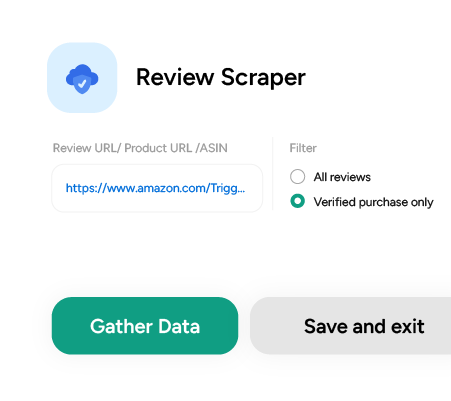
For on-demand market analysis or deal underwriting, ScrapeHero Cloud provides pre-built, no-code extractors.
- Zero coding: Paste target search URLs or zip codes to start extracting immediately.
- Instant exports: Download clean records in CSV, Excel, or JSON formats.
- Automated scheduling: Run crawls on daily, weekly, or monthly cadences.
- Direct cloud sync: Deliver datasets directly to Amazon S3, Google Drive, or Dropbox.
Fully Managed Enterprise Pipelines
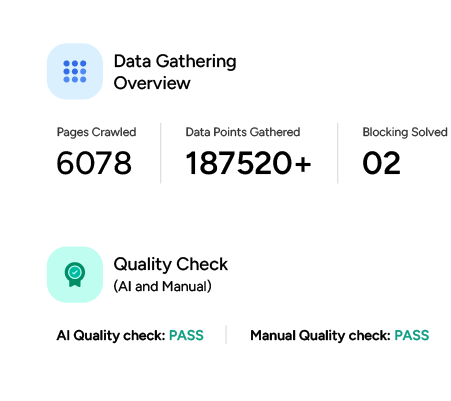
For funds, REITs, and proptech platforms requiring continuous nationwide feeds, hire ScrapeHero’s web data extraction service. You get:
- Custom schemas: Extraction workflows mapped directly to your internal database tables.
- Warehouse delivery: Automated feeds delivered to Snowflake, BigQuery, or S3 buckets.
- Proactive maintenance: Dedicated engineers resolve anti-bot and selector shifts under enterprise SLAs.
- Automated QA: Rigorous validation checks guarantee record completeness and data hygiene.
Start a Project
Get started with ScrapeHero Cloud and use our ready-made scrapers to collect real estate data with ease.
Need something different?
Tell us your item list or categories, the zip codes or stores you need covered, and your required update cadence. We’ll scope it and quote it. Contact ScrapeHero sales to get started.

Frequently Asked Questions
Yes. ScrapeHero Cloud requires zero programming. Simply paste search URLs from Zillow, Redfin, Realtor.com, or Trulia into the scraper to download clean spreadsheets.
ScrapeHero routes requests through rotating residential proxies, emulating realistic browser fingerprints and executing JavaScript to bypass CAPTCHAs automatically.
Yes. Run concurrent jobs across our dedicated portal scrapers, or partner with our managed team to merge multi-portal listings into a unified feed.
Data is available in CSV, Excel (.xlsx), and JSON formats. You can also configure automated deliveries into Amazon S3, Google Drive, Dropbox, or via REST API.
Cloud scrapers run on demand or on automated schedules (hourly, daily, weekly, monthly). For enterprise clients, our managed pipelines stream daily feeds under formal SLAs.