Unlike in physical stores, online buyers can easily compare the products available in the market before buying. This is one of the reasons why businesses, especially e-commerce businesses, rely on price monitoring tools to track competitors’ prices and use the insights to price their products accordingly.
Price monitoring is the regular tracking and analysis of prices for similar products or services offered by competitors. Businesses regularly utilize these tools to monitor prices and ensure a competitive place in the market.
In this blog, we have compiled a list of the best price monitoring tools for e-commerce available in 2025. These tools for monitoring prices are used regularly by businesses to ensure a competitive position in the market.
We should mention upfront: we’re ScrapeHero, so we’re naturally confident in our tools. That said, we’ve included fair assessments of competitors because we believe you deserve options.
Price monitoring tools at a glance
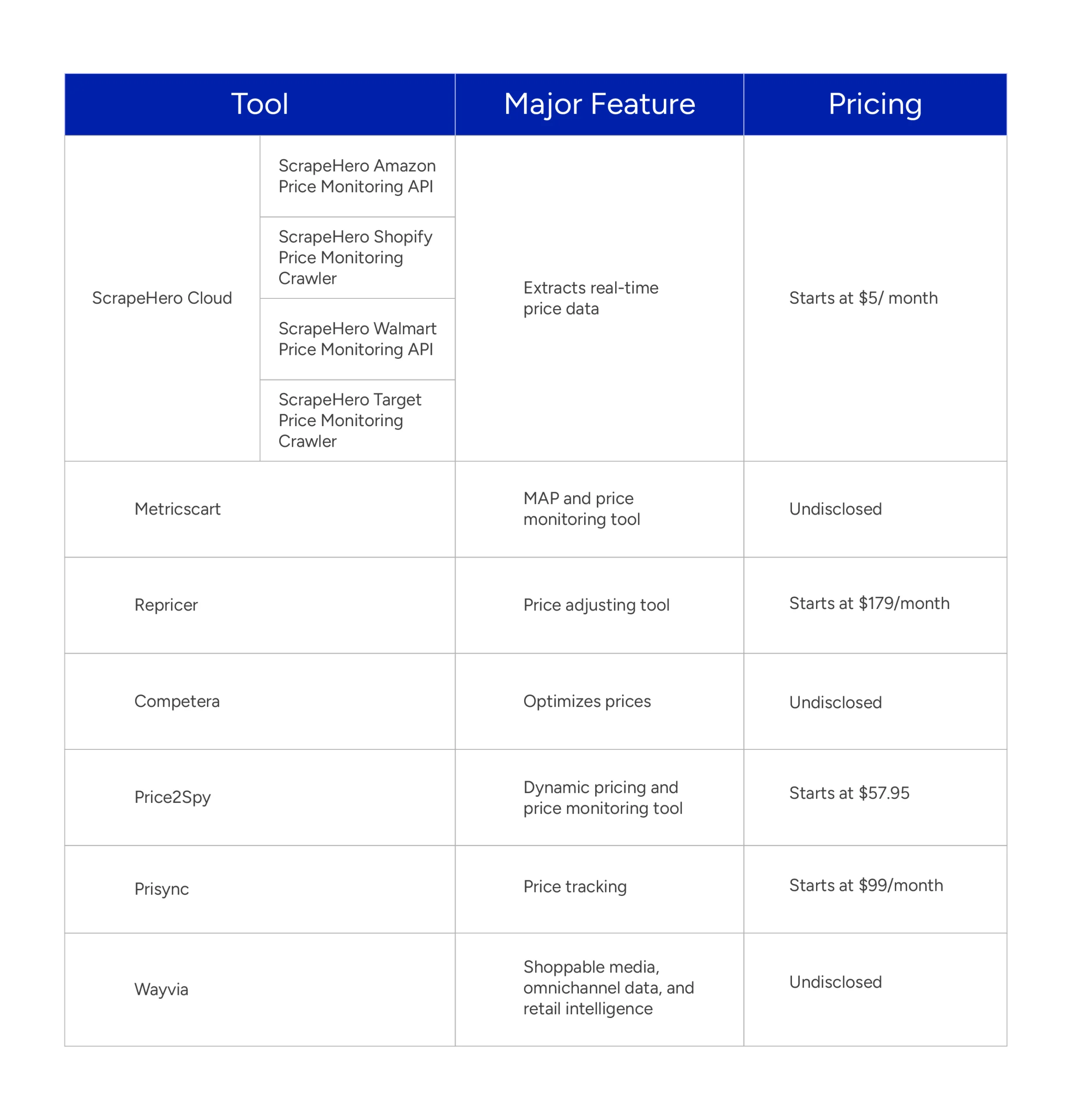
ScrapeHero Cloud: Extracts real-time price data; pricing starts at $5/month.
- ScrapeHero Amazon Price Monitoring API.
- ScrapeHero Shopify Price Monitoring Crawler.
- ScrapeHero Walmart Price Monitoring API.
- ScrapeHero Target Price Monitoring Crawler.
Metricscart: MAP and price monitoring tool; pricing undisclosed.
Repricer: Price adjusting tool; pricing starts at $179/month.
Competera: Optimizes prices; pricing undisclosed.
Price2Spy: Dynamic pricing and price monitoring tool; pricing starts at $57.95/month.
Prisync: Price tracking; pricing starts at $99/month.
Wayvia: Shoppable media, omnichannel data, and retail intelligence; pricing undisclosed.
ScrapeHero Cloud
ScrapeHero Cloud offers a suite of price-monitoring tools, built on APIs and no-code scrapers, depending on your platform and technical needs. The platform includes tools for Amazon, Shopify, Walmart, and Target, allowing you to extract real-time pricing and product data from each marketplace for competitor pricing analysis.
Amazon Price Monitoring API
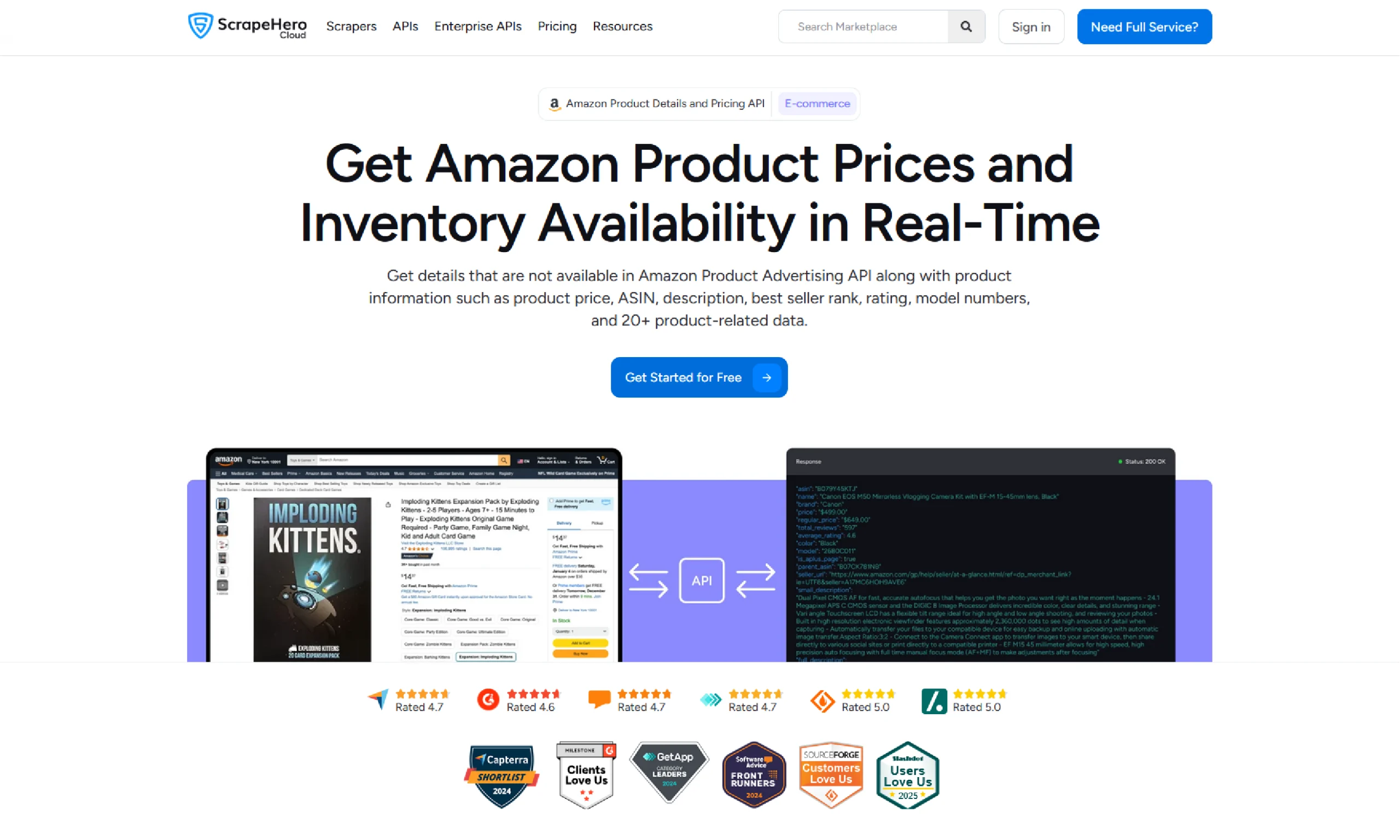
The Amazon Price Monitoring API is designed for developers who want to integrate price data directly into their applications. It automatically handles changes to Amazon page structures and retrieves more data points than Amazon’s official API, including pricing, availability, and product details. The tool uses residential proxies to avoid IP bans and captchas.
Shopify Price Monitoring Scraper
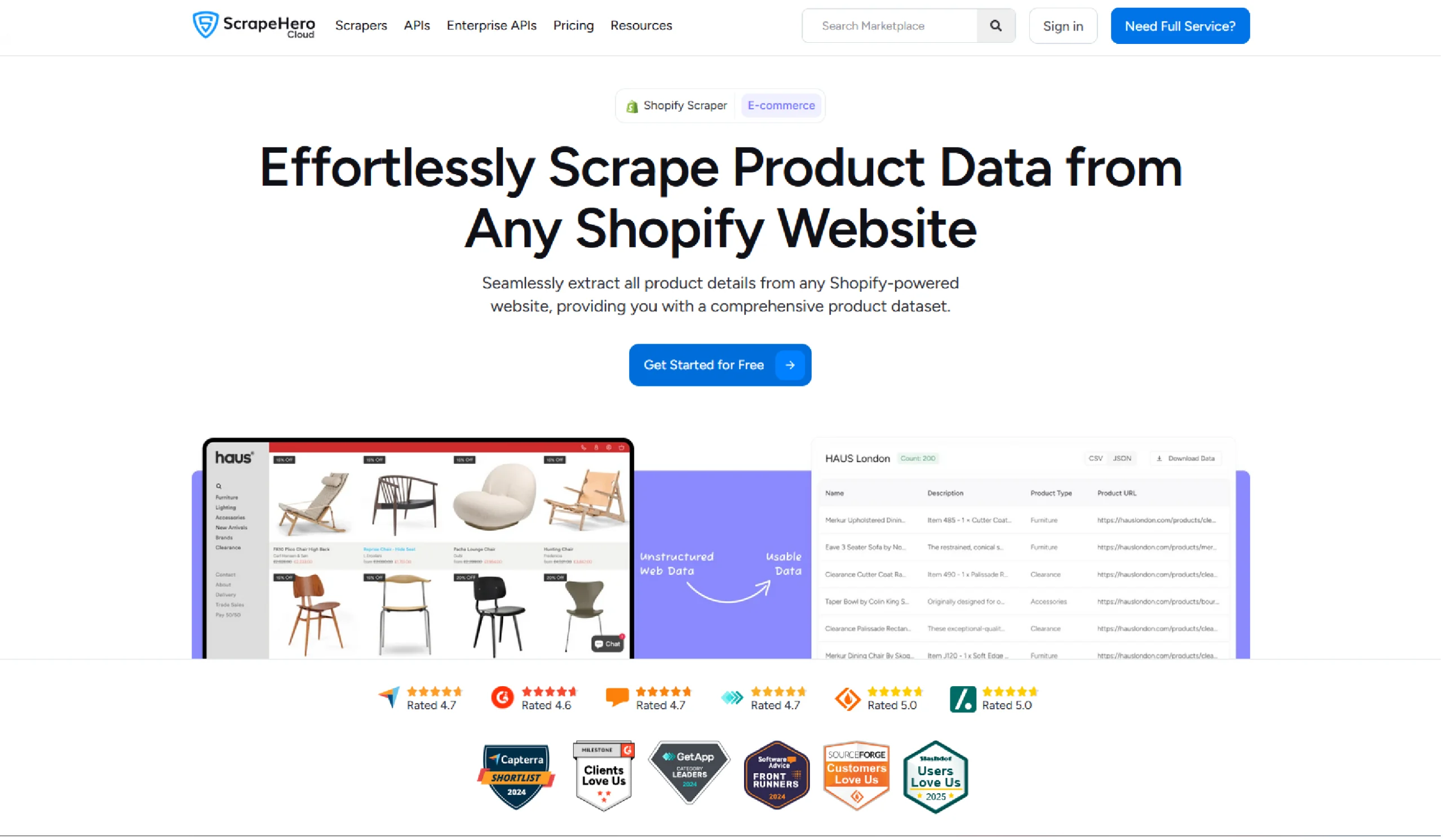
The Shopify Price Monitoring Scraper works with any Shopify-powered store and requires no coding knowledge to set up—you simply provide URLs, and it extracts pricing, product descriptions, titles, and variants. You can schedule it to run hourly, daily, or weekly, and ScrapeHero handles all maintenance automatically.
Walmart Price Monitoring API
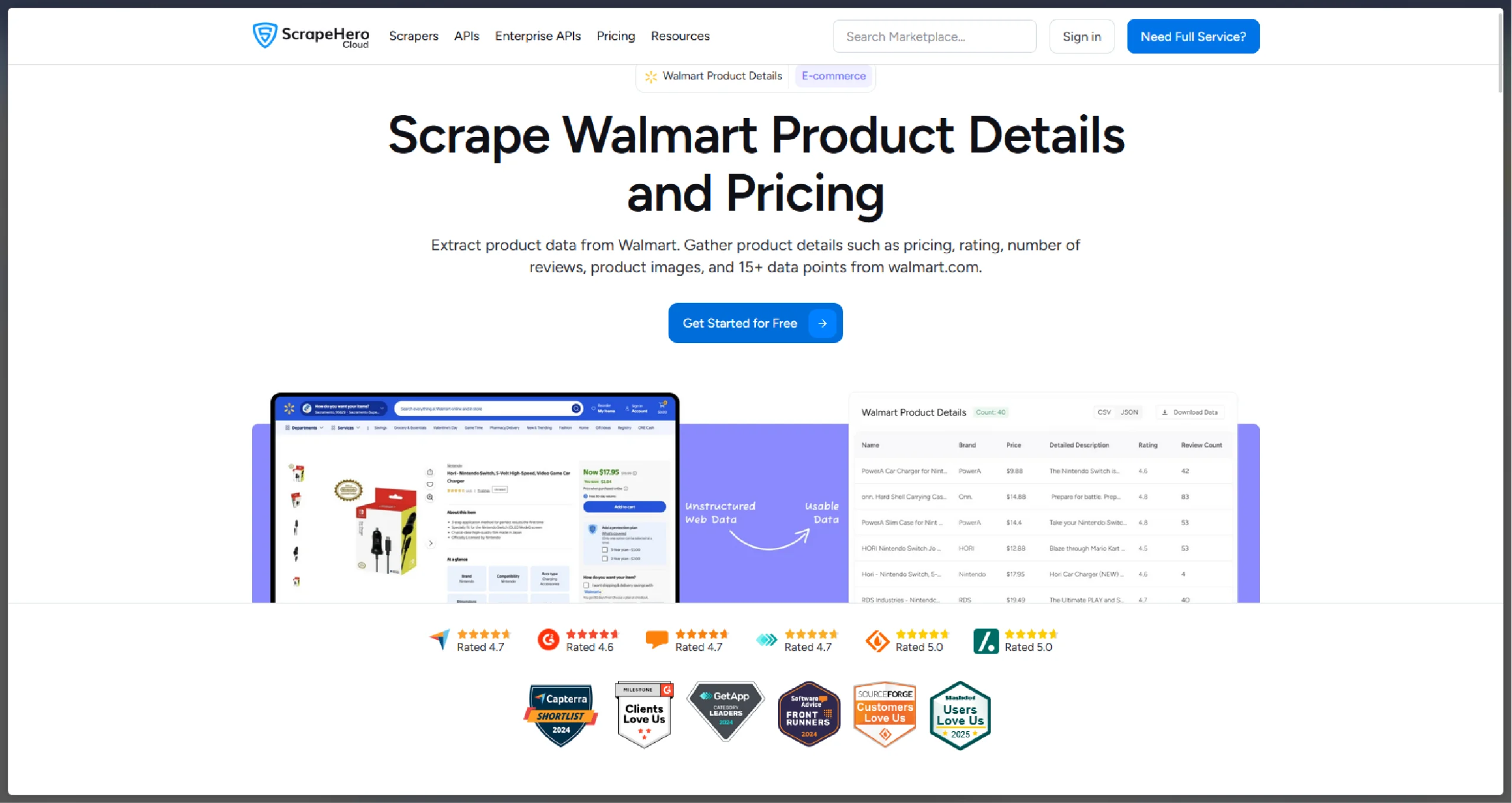
Similar to the Amazon tool, this Walmart Price Monitoring API integrates with your applications to stream real-time structured JSON data within seconds. It offers more flexibility than Walmart’s official API and also uses residential proxies for reliable data collection.
Target Price Monitoring Scraper
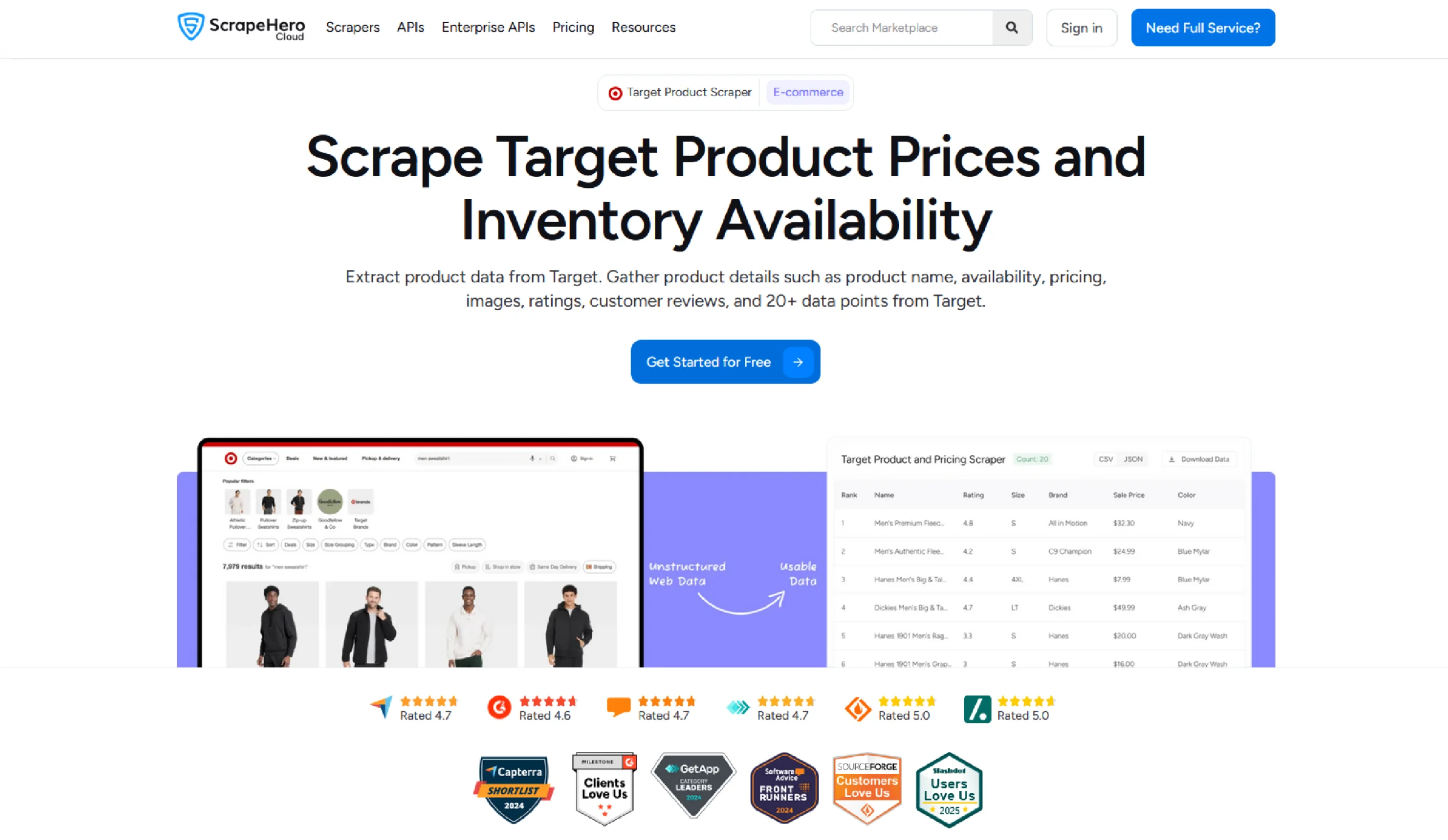
The Target Price Monitoring Scraper extracts pricing from Target and includes a unique feature: zip code-based tracking, allowing you to monitor location-specific pricing. Like the Shopify tool, it requires no coding and can be scheduled for periodic updates.
All ScrapeHero Cloud tools share the same characteristics:
Pros
- The platform provides access to raw, structured data that you can analyze and integrate however you need.
- Unlike tools that lock you into pre-built dashboards, you get the flexibility to build custom workflows and connect to your own systems.
- For no-code users, setup is straightforward and requires no maintenance.
Cons
- The API-based tools require basic programming knowledge to implement and maintain.
- The no-code scrapers, while easy to use, are less customizable to specific data extraction needs beyond what they offer.
If you need custom functionality, contact ScrapeHero separately.
Pricing
- You receive 400 free credits on signup
- Premium plans start at $5 per month.
- This single subscription covers access to all four tools.
Metricscart
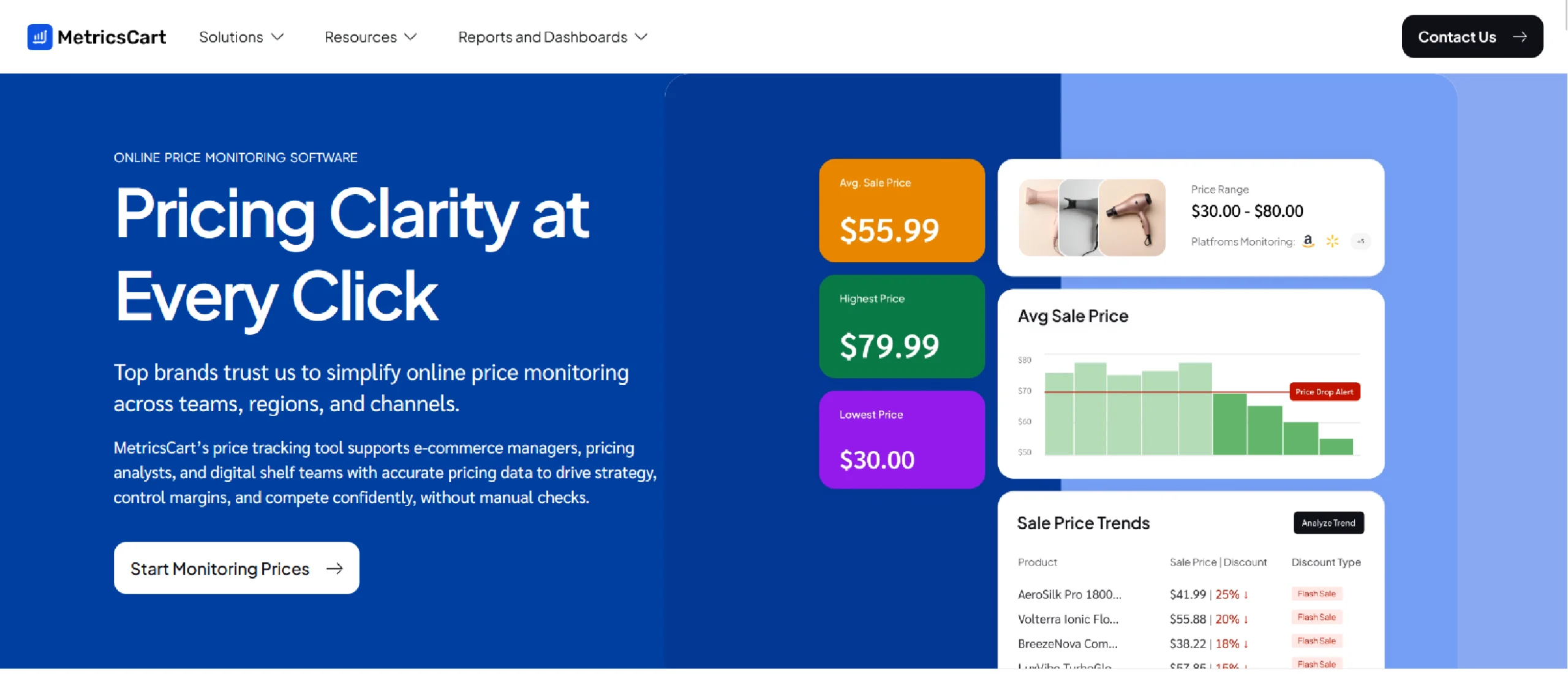
Metricscart is a price monitoring solution that combines real-time intelligence with MAP monitoring. In addition to providing raw data, it also delivers actionable insights.
Pros
- Metricscart can track competitors’ prices in real-time with a refresh rate of 10 seconds.
- You can use this tool to detect MAP violations, automatically collect evidence, and create tiered action plans for map enforcement.
- It can monitor pricing across popular e-commerce sites, including Amazon and Walmart.
- Metricscart gives complete access to the raw data, thereby preventing vendor lock-in.
Cons
- Metricscart doesn’t have a self-service free trial. You need to contact them and schedule a demo.
Pricing
- The prices are undisclosed.
Repricer
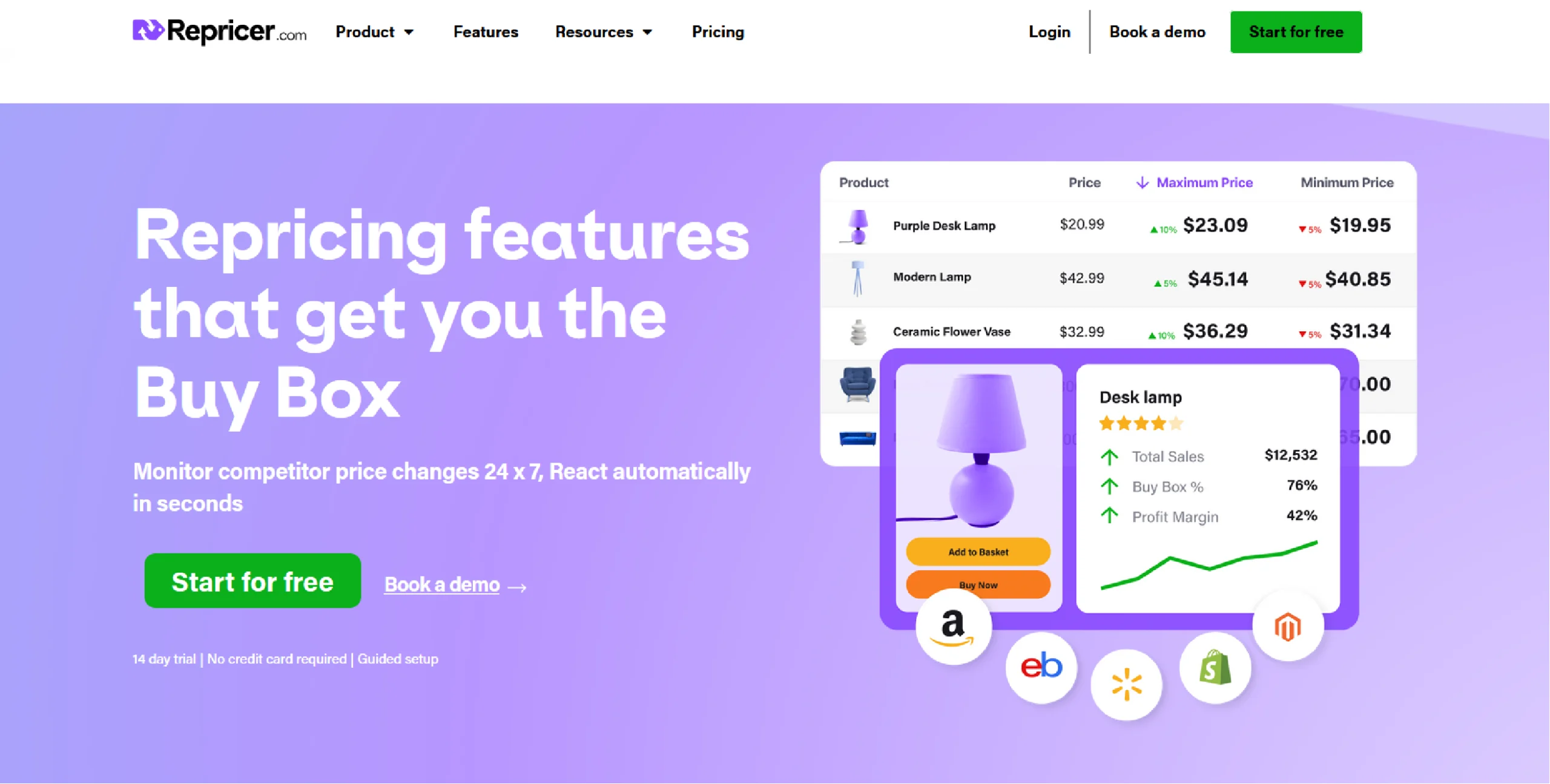
Repricer is software specifically designed to automatically adjust the prices of your products. It monitors competitor prices and adjusts your prices accordingly, leading to higher sales.
Pros
- The software continuously monitors competitor prices and can react instantly to any changes.
- You can define specific rules and parameters for repricing, such as minimum price limits, desired Buy Box position, and profit margin targets.
- It has a feature called safe mod that lets you see how prices will change without actually publishing the data.
Cons
- Repricer’s focus on staying competitive may sometimes lead to price wars, which could potentially reduce profit margins.
- The effectiveness of Repricer heavily relies on the accuracy of the competitor data it collects. Data discrepancies can lead to suboptimal pricing decisions.
Pricing
- Repricer allows for a 14-day free trial.
- Paid plans start at $179 a month.
Competera
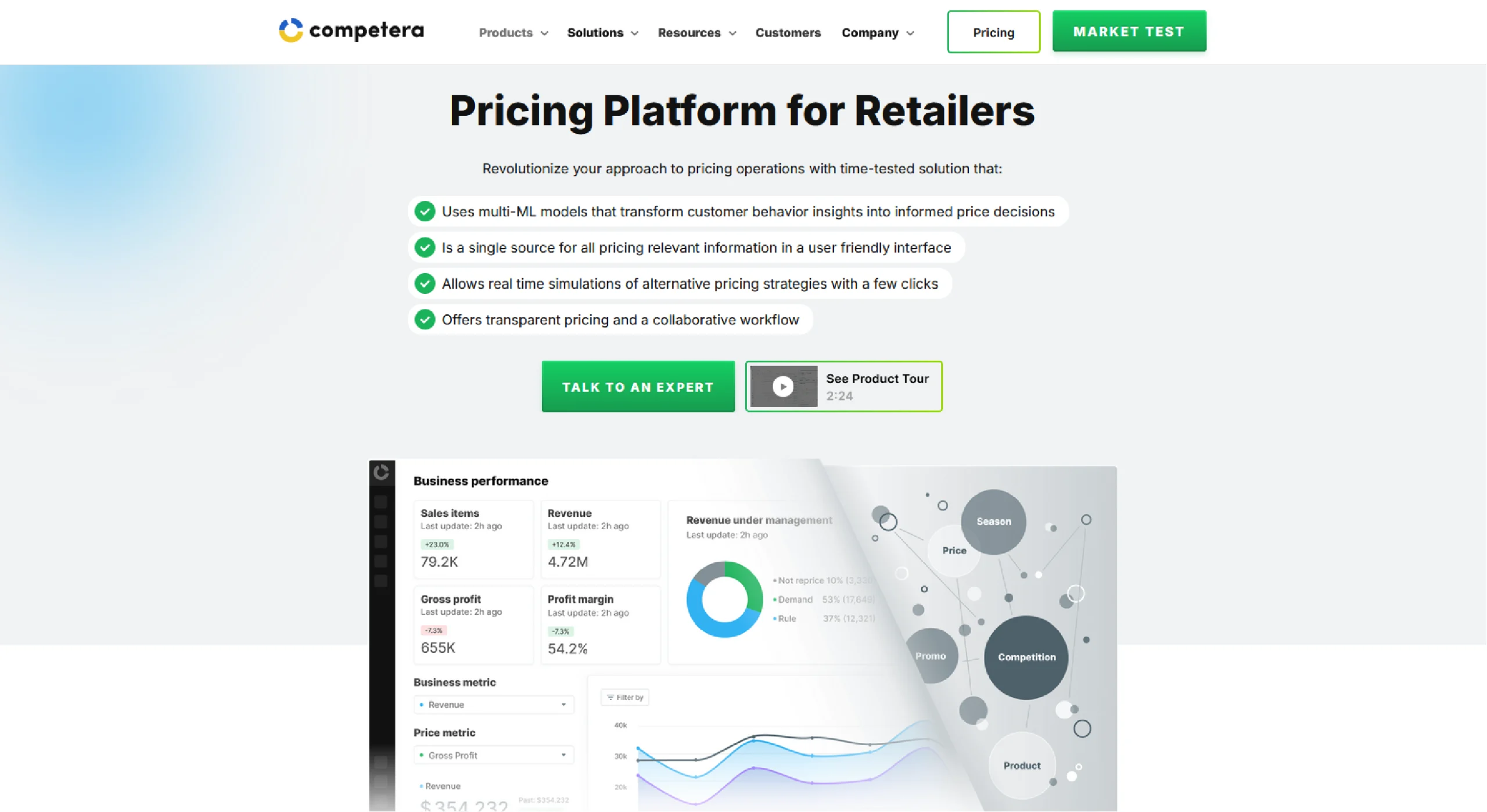
Competera.com is a platform offering AI-powered pricing solutions for retailers. Its solution helps businesses optimize their pricing strategies across online and offline channels.
Pros
- Competera uses advanced algorithms and machine learning to analyze factors like competitor pricing, market trends, demand elasticity, and historical sales data.
- It goes beyond simply matching competitor prices. Their AI technology analyzes customer demand patterns and product elasticity to determine the ideal price point that maximizes profit while considering customer responsiveness.
- They offer solutions for managing pricing across online stores, physical stores, and marketplaces.
Cons
- The platform utilizes AI and advanced algorithms. For users unfamiliar with data-driven pricing strategies, this can be a significant learning curve.
- Competera primarily targets larger businesses, so it might not be affordable for smaller retailers with limited budgets.
Pricing
- The prices are undisclosed.
Price2Spy
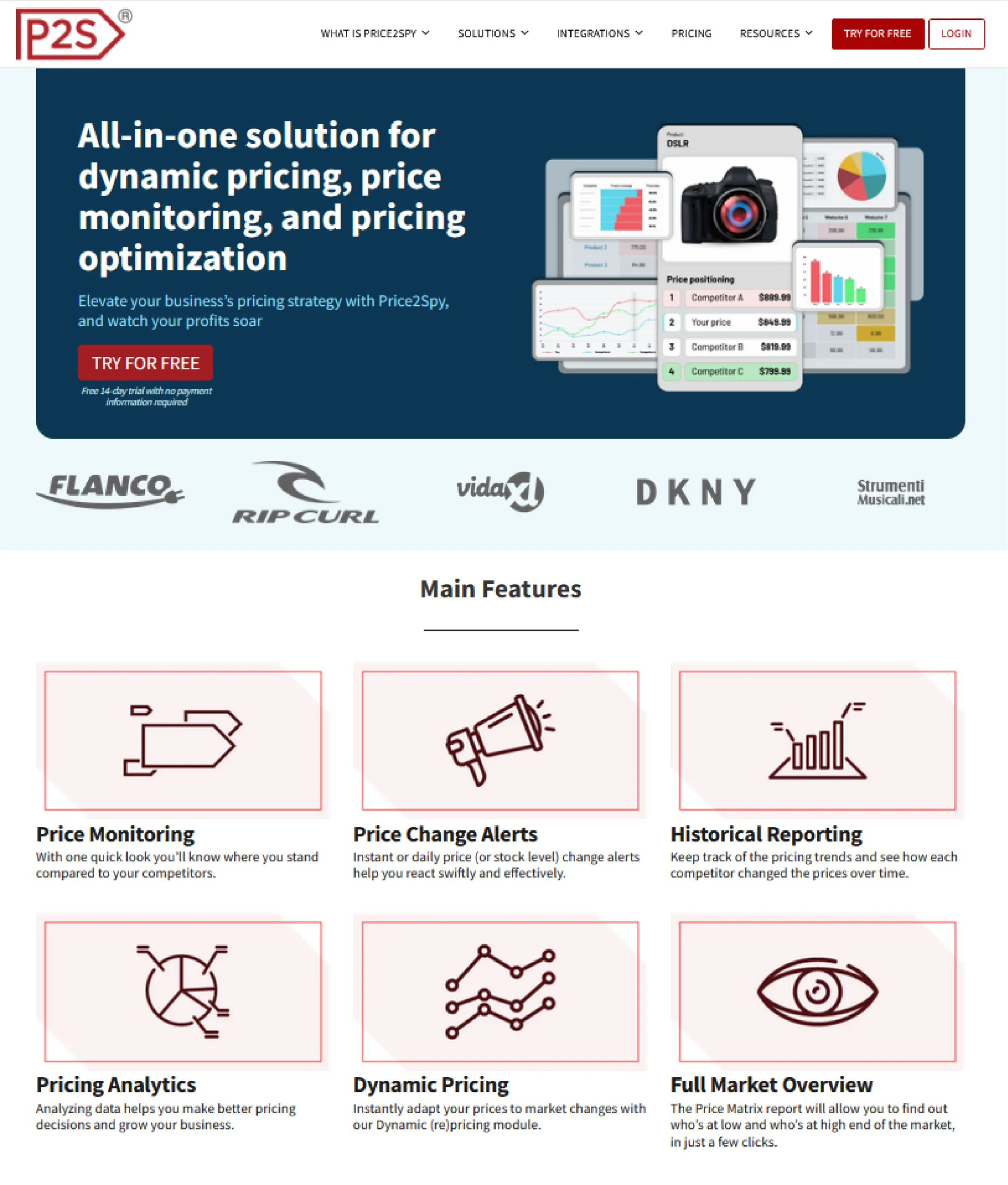
Price2Spy is dynamic pricing, price monitoring, and optimization software designed specifically for e-commerce businesses. It can track competitor pricing across different online marketplaces and stores.
Pros
- This online price monitoring tool allows you to set up real-time alerts to be notified whenever a competitor changes their pricing.
- It can provide detailed reporting and analytics into competitor pricing history, trends, and overall market dynamics.
- It can automate price adjustments based on pre-defined rules and parameters.
Cons
- This e-commerce price monitoring tool offers a limited number of integrations.
- Price2Spy has limitations in data format support (supports only CSV or XML) when scraping competitor websites.
Pricing
- It offers a 14-day free trial.
- Paid plans start at $57.95 per month for basic plans with limited product tracking.
Prisync
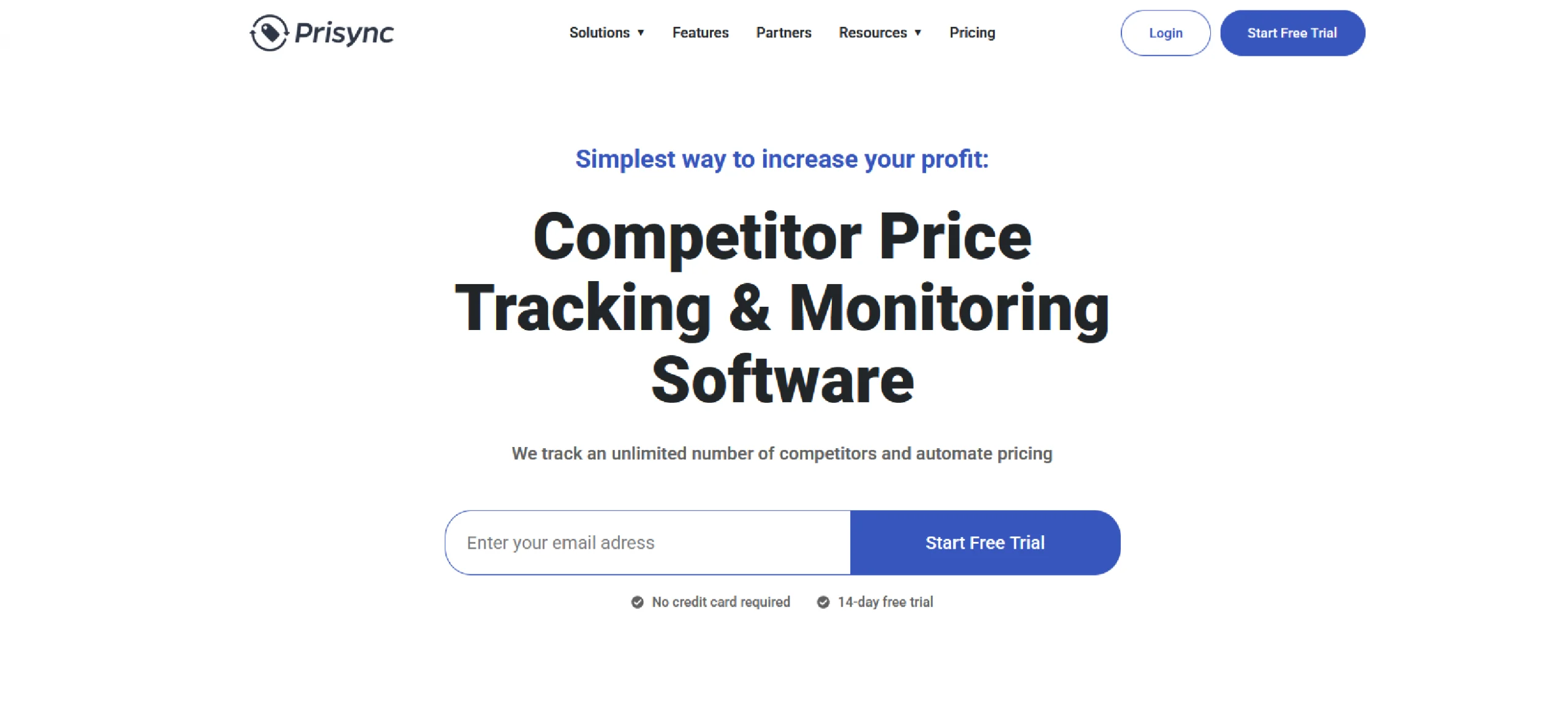
Prisync is a competitor price tracking software designed for e-commerce businesses. It monitors the prices and stock availability of your competitors’ products and helps set automated pricing rules. This competitor price monitoring tool focuses on Shopify and Google Shopping.
Pros
- The Prisync e-commerce price monitoring tool provides detailed analytics and reporting.
- It lets you optimize product details across different online retailers with their Digital Shelf Management.
Cons
- While the interface of this price monitoring tool is generally user-friendly, some aspects of setup might require some technical understanding, especially for complex integrations.
Pricing
- This e-commerce price monitoring tool is available for a 14-day free trial.
- Their basic plan, which does not provide API access, starts at $99 per month.
Wayvia
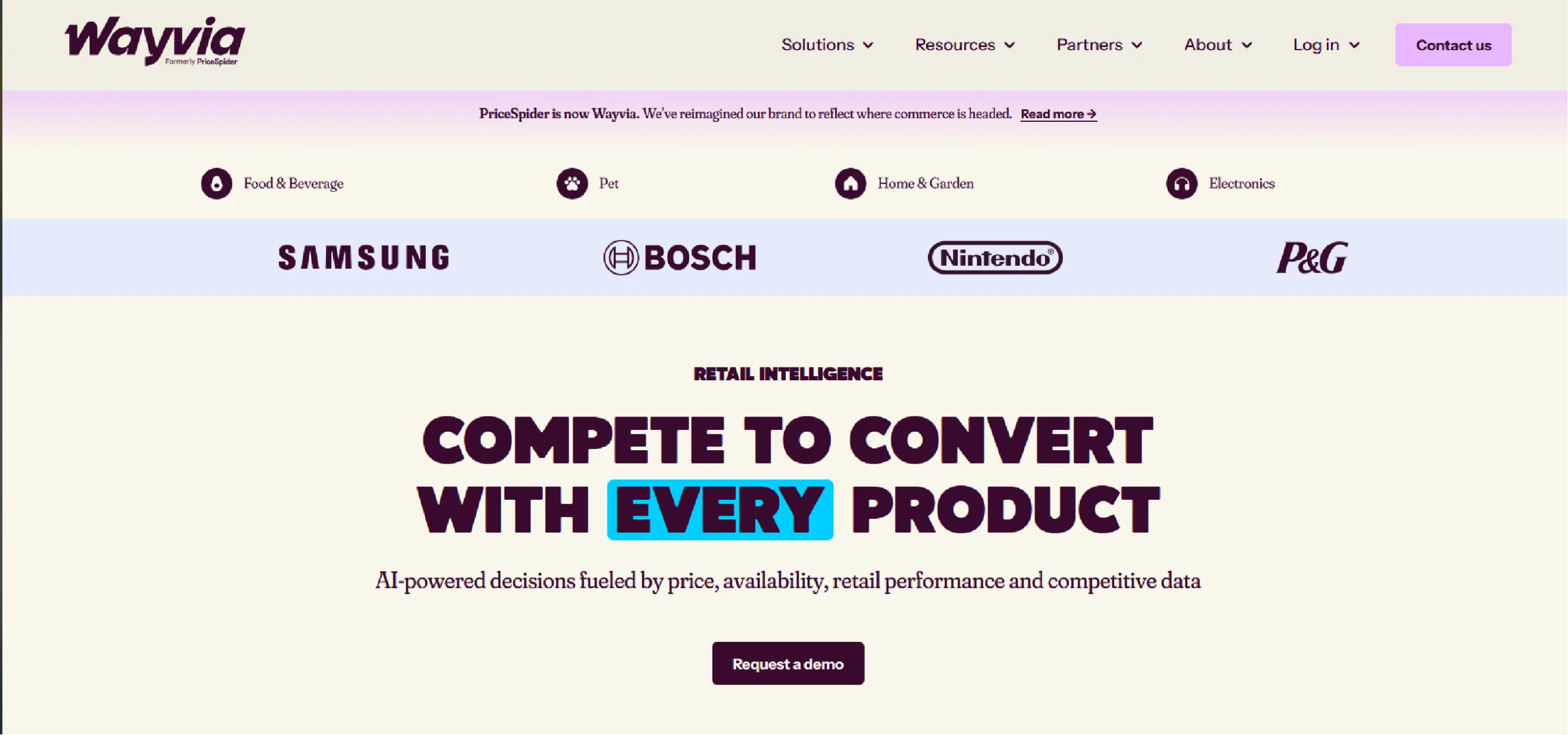
Wayvia is a platform that offers software solutions for brands to manage their online presence and sales. Its tool, Prowl, focuses on monitoring the Minimum Advertised Price (MAP).
Pros
- Prowl can track competitor pricing and identify unauthorized sellers.
- The platform is user-friendly with a clear interface.
- The data can be used to identify pricing discrepancies, enforce MAP compliance, and optimize pricing strategies.
Cons
- Prowl is a paid service, and the cost can vary depending on the features and data volume required.
Pricing
- Not publicly disclosed on the website.
Closing Thoughts on the Best Price Monitoring Tools
It is beyond doubt that price monitoring tools are essential tools for e-commerce businesses. By regularly monitoring how competitors price, these tools help business owners improve their pricing strategies, increase sales and customer satisfaction, and gain greater market awareness.
This blog lists the best price monitoring tools available in 2025. You may choose one based on your requirements and capabilities. But if you require a cost-effective and scalable custom price monitoring service, it is best to outsource to a web scraping service like ScrapeHero. Our custom price monitoring solutions can easily gather and consolidate data from websites such as Amazon, eBay, Walmart, Target, and other marketplaces.
Frequently Asked Questions
There are a few ways to monitor prices in the e-commerce business. One way would be to conduct regular market research by visiting the competitor websites and stores. There are also marketing and research tools that let you observe trends, analyze sentiment, and more. But the better way to go about it is by using price monitoring tools available in the market.
The main reason e-commerce business owners monitor competitors’ prices is to stay ahead. The idea is to track how competitors’ prices change. By doing so, businesses can ensure that their prices are always placed strategically; not high, not low. By improving their pricing strategy, companies can increase sales and make more profit in the long run.