Tesco is the dominant leader in the UK grocery market, holding a 28.3% market share and an annual turnover of over £61 billion. While traditional giants lead in scale, brands like ALDI and Marks & Spencer currently hold the highest popularity ratings among consumers.
The UK grocery landscape is changing fast, and keeping track of who is actually winning can be a challenge.
In this guide, you’ll learn which retailers are dominating the financial leaderboard and which are winning the hearts of the public.
Data Sources:
- The POI data downloaded from ScrapeHero Data Store.
- ESMagazine.com
- YouGov.com
- Worldpanelbynumerator.com
| Category | Tesco | Sainsbury’s | ASDA | Morrisons |
|---|---|---|---|---|
| Annual Turnover | £61.47 Billion | £32.7 Billion | £21.7 Billion | £15.28 Billion |
| Market Share | 28.3% | 15.3% | 11.8% | 8.3% |
| Store Count | 2,953 | 1,475 | 1,115 | 1,809 |
| Fame (Awareness) | 99% | 98% | 100% | 100% |
| Popularity (Likability) | 75% | 72% | 64% | 66% |
| Presence in Northern Ireland | Yes | Yes | Yes | No |
Market Dominance: A Supermarkets in the UK Industry Analysis
Tesco continues to sit at the top of the UK grocery market.
It has reached a staggering annual turnover of £61.47 billion. This is almost double Sainsbury’s revenue.
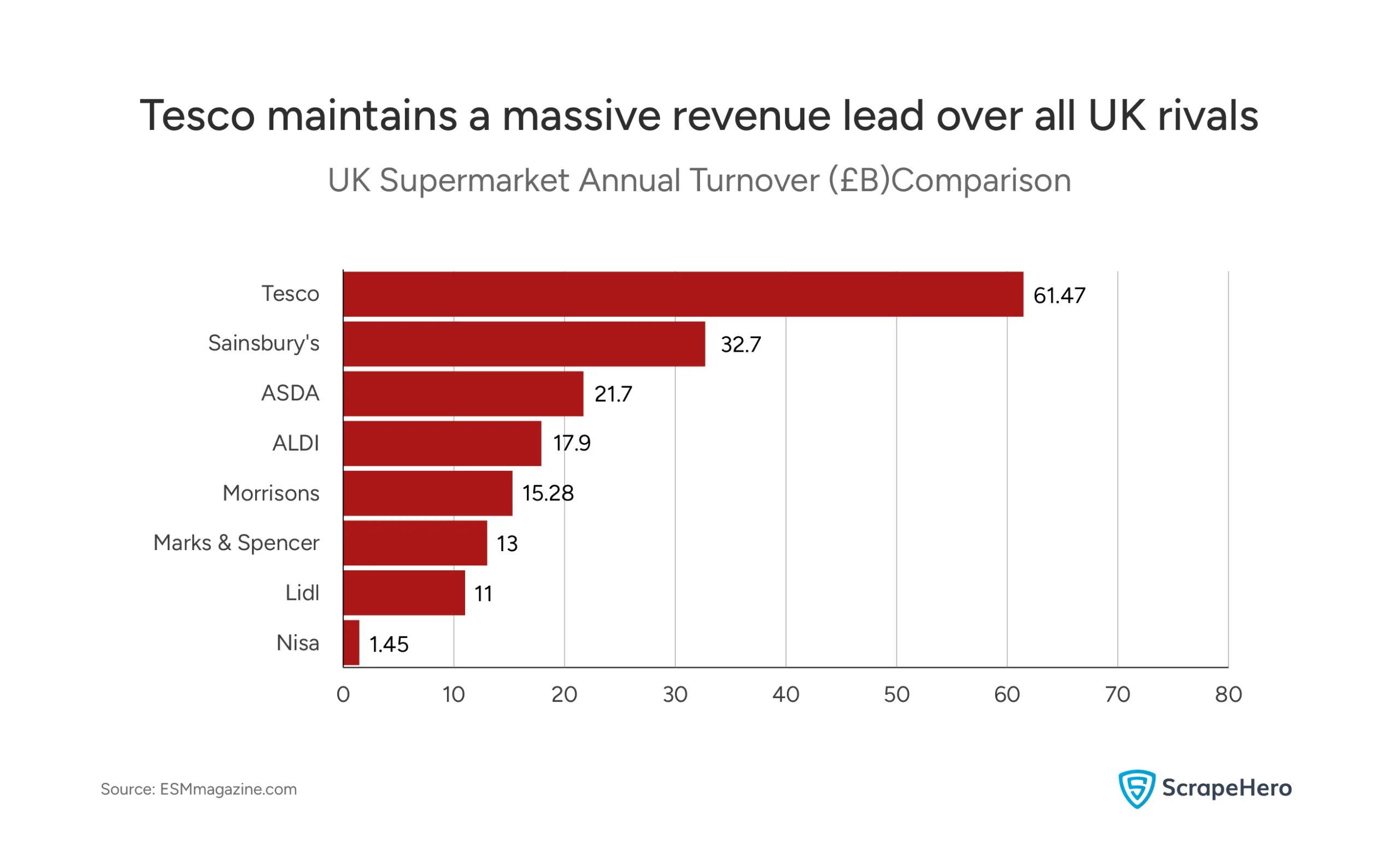
While the “Big Four” still hold the most power, the gap is widening. Discounters like ALDI and Lidl are growing, but they still trail significantly behind the leaders in total revenue.
- Tesco: £61.47 Billion (Leader)
- Sainsbury’s: £32.7 Billion
- ASDA: £21.7 Billion
- ALDI: £17.9 Billion
- Morrisons: £15.28 Billion
💡The Big Four Supermarkets in the UK Traditionally, the “Big Four Supermarkets” meant the four largest grocery chains that have historically dominated the UK market. While discount retailers like ALDI are now challenging this hierarchy, the traditional Big Four are: Together, these four giants account for over 60% of UK grocery spending.
Which Supermarket Has the Largest Market Share in the UK?
As of 2026, Tesco remains the clear market leader, controlling 28.3% of the UK grocery market. Sainsbury’s follows in second place with 15.3%, while Nisa and ASDA maintain competitive shares of 11.9% and 11.8% respectively.
Tesco holding 28.3% of the total market means nearly £1 out of every £3 spent on groceries in the UK goes to Tesco.
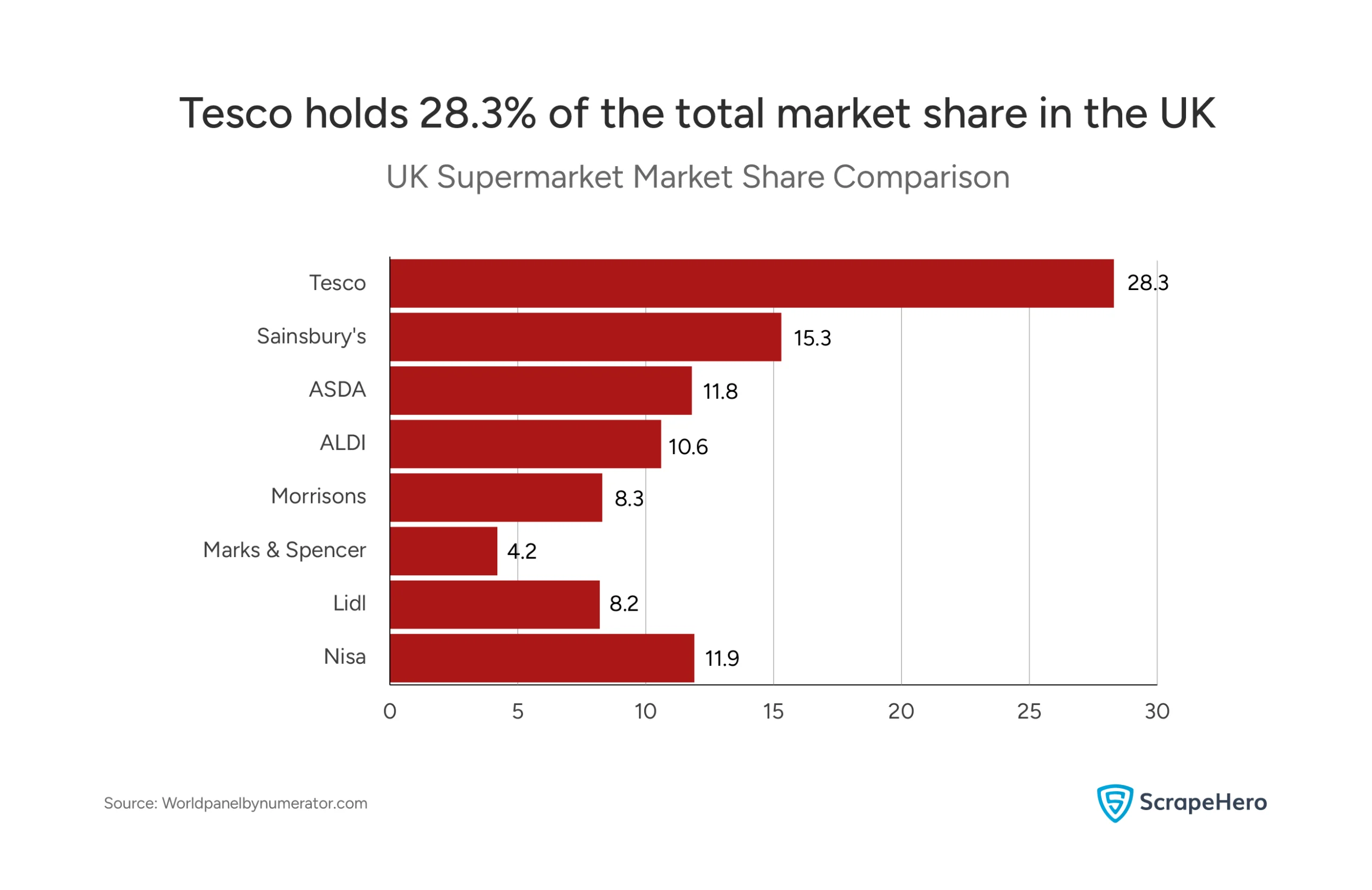
So the list of UK supermarkets by market share is as follows:
- Tesco: 28.3%
- Sainsbury’s: 15.3%
- Nisa: 11.9%
- Asda: 11.8%
- Aldi: 10.6%
- Morrisons: 8.3%
- Lidl: 8.2%
- Marks & Spencer: 4.2%
But according to IBIS World’s Supermarkets in the UK – Market Research Report (2015-2030),
The Big Four supermarkets are losing market share.
Shoppers flock to discounters like Aldi and Lidl due to their quality products at lower prices, while premi um supermarkets face challenges adjusting to cost-conscious consumers.
Store Distribution and Geographic Footprint
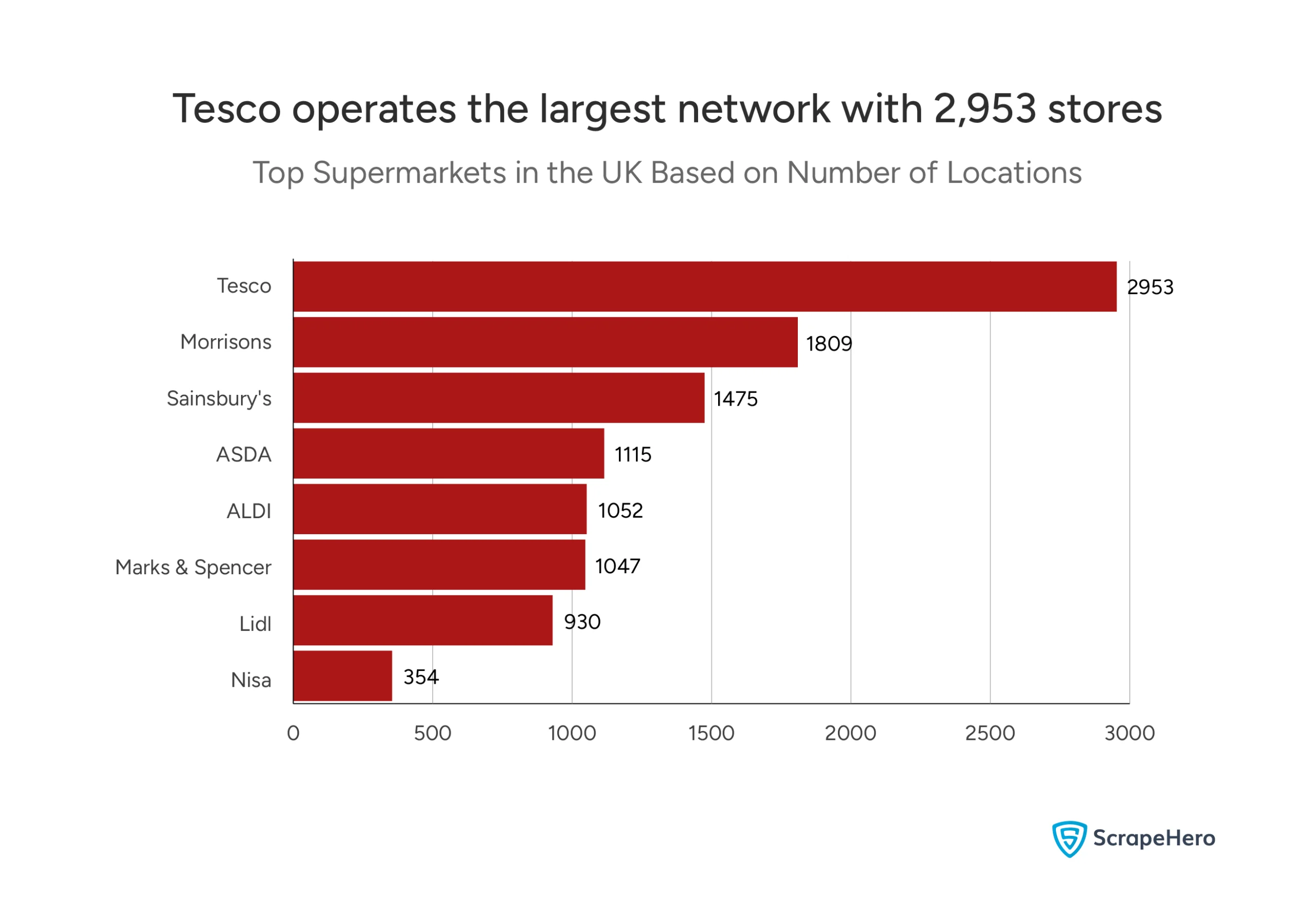
Physical presence is a huge part of the Supermarkets in the UK Industry Analysis. Currently, six major retailers have successfully scaled to more than 1,000 locations across the country.
- Tesco: 2,953 stores
- Morrisons: 1,809 stores
- Sainsbury’s: 1,475 stores
- The Rest: Marks & Spencer, ALDI, and ASDA also maintain over 1,000 stores each.
Get the complete list of all Tesco store locations in the UK, with geocoded addresses, phone numbers, open hours, stock tickers, etc., for instant download.
How does geographic presence vary by state?
Regional data reveals a surprising gap in the market. While England is saturated, major players like ALDI, Lidl, and Morrisons currently have no store presence in Northern Ireland.
- England: Highest density for all brands.
- Scotland & Wales: Steady presence from the “Big Four”.
Northern Ireland: Limited to specific brands like Tesco and Sainsbury’s.
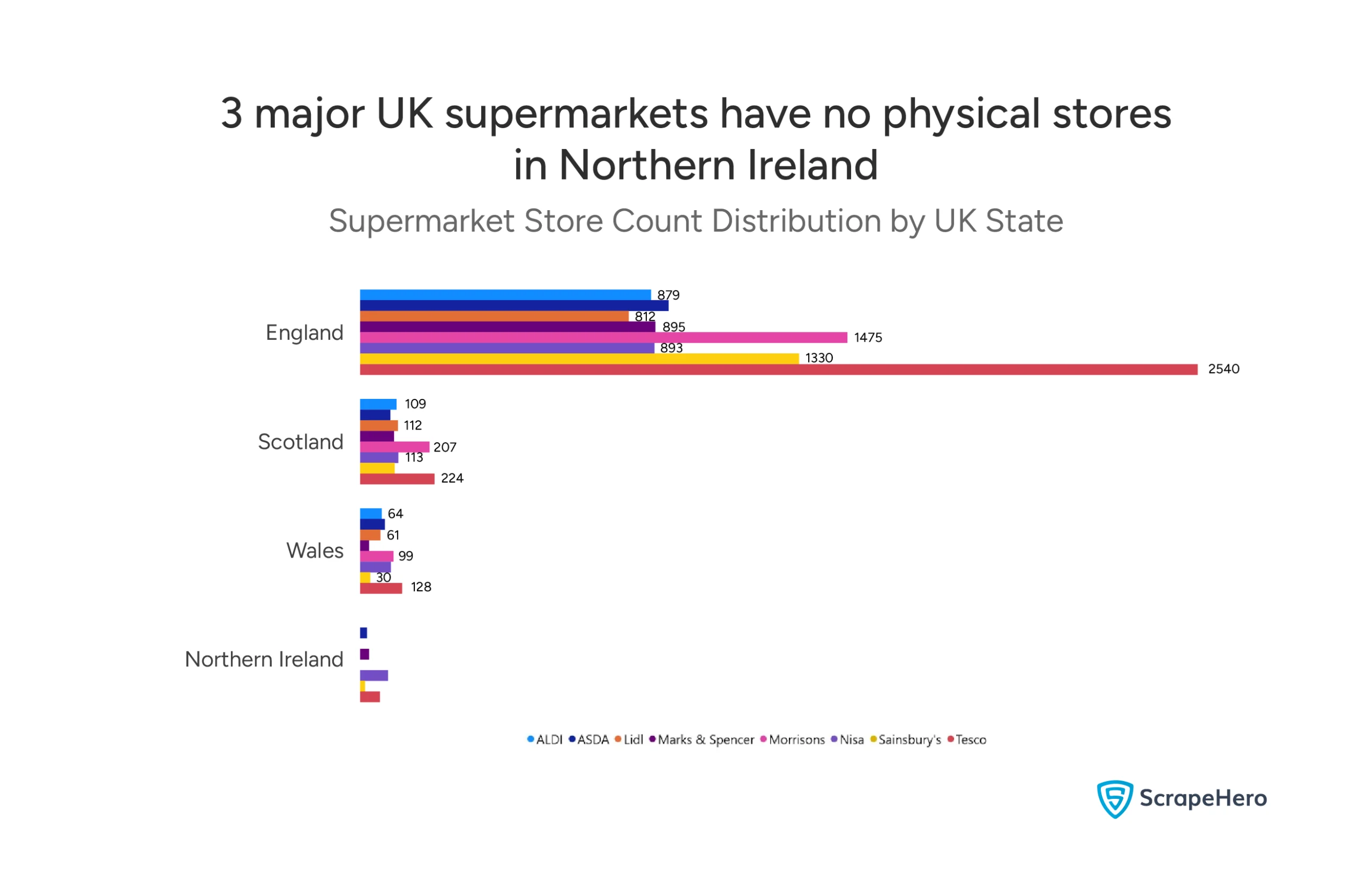
While England is saturated, other regions show significant gaps in coverage. One of the most striking findings is that ALDI, Lidl, and Morrisons currently have zero store presence in Northern Ireland.
Brand Sentiment vs. Market Reality Towards the Supermarkets in the UK
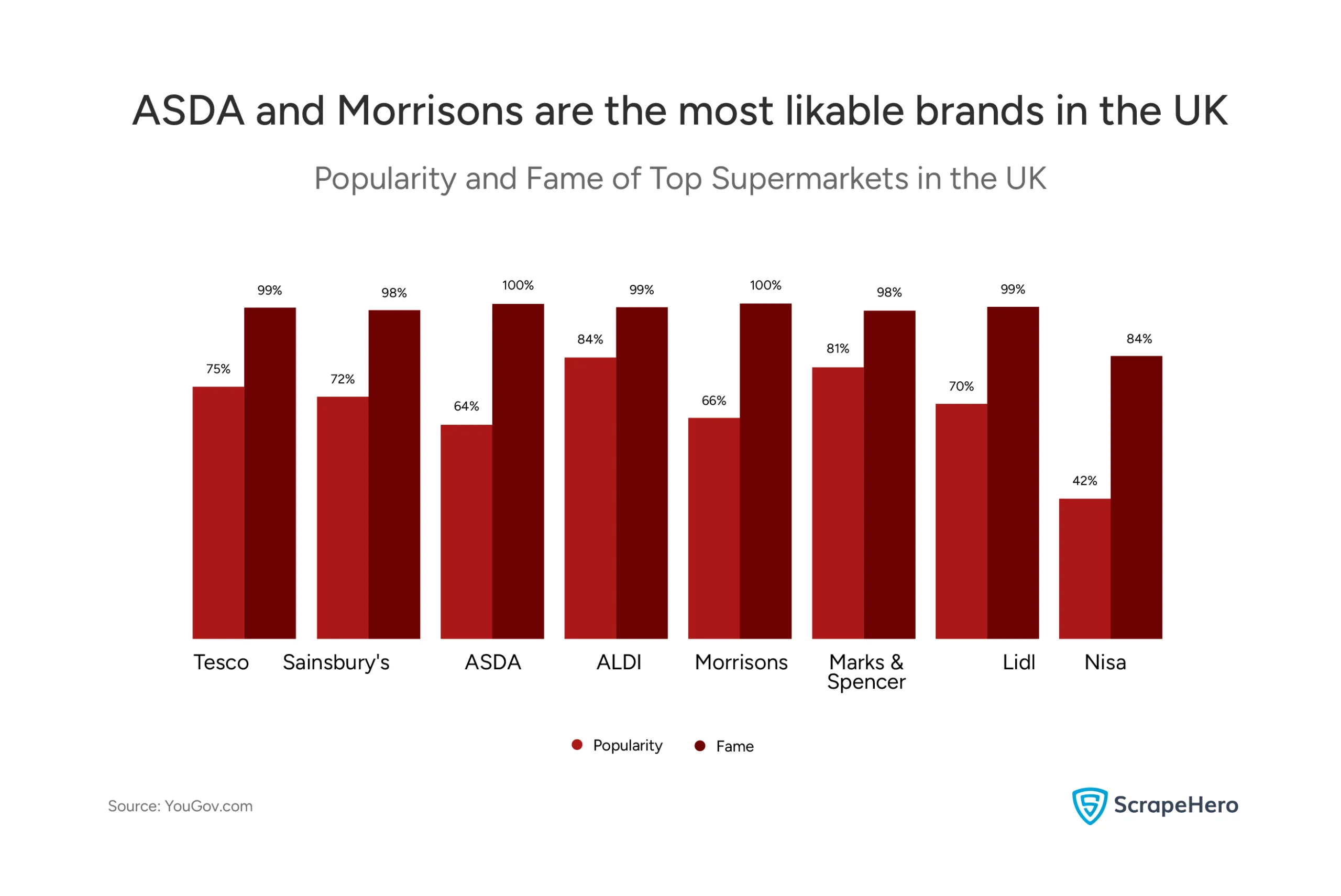
A high-authority analysis must distinguish between market size and brand health. Data suggests that being the biggest does not necessarily mean being the most “liked.”
- The Popularity Paradox: Despite their smaller market shares compared to Tesco, ASDA and Morrisons are the most likable brands in the UK, both boasting 100% popularity ratings.
- The Fame Gap: Most major brands enjoy “Fame” (awareness) scores between 98% and 100%.
Polarizing Brands: Nisa is identified as a polarizing brand with relatively high fame (84%) but the lowest popularity in the sector (42%).
Which Supermarket is the Most Polarizing in the UK?
Nisa stands out as the most polarizing brand in the industry. While it has a high fame score of 84%, its popularity sits at a much lower 42%.
This is the only major brand where popularity falls below the 50% mark. This data indicates that while many people know the brand, fewer have a positive opinion of it.
Digital Engagement and Search Trends
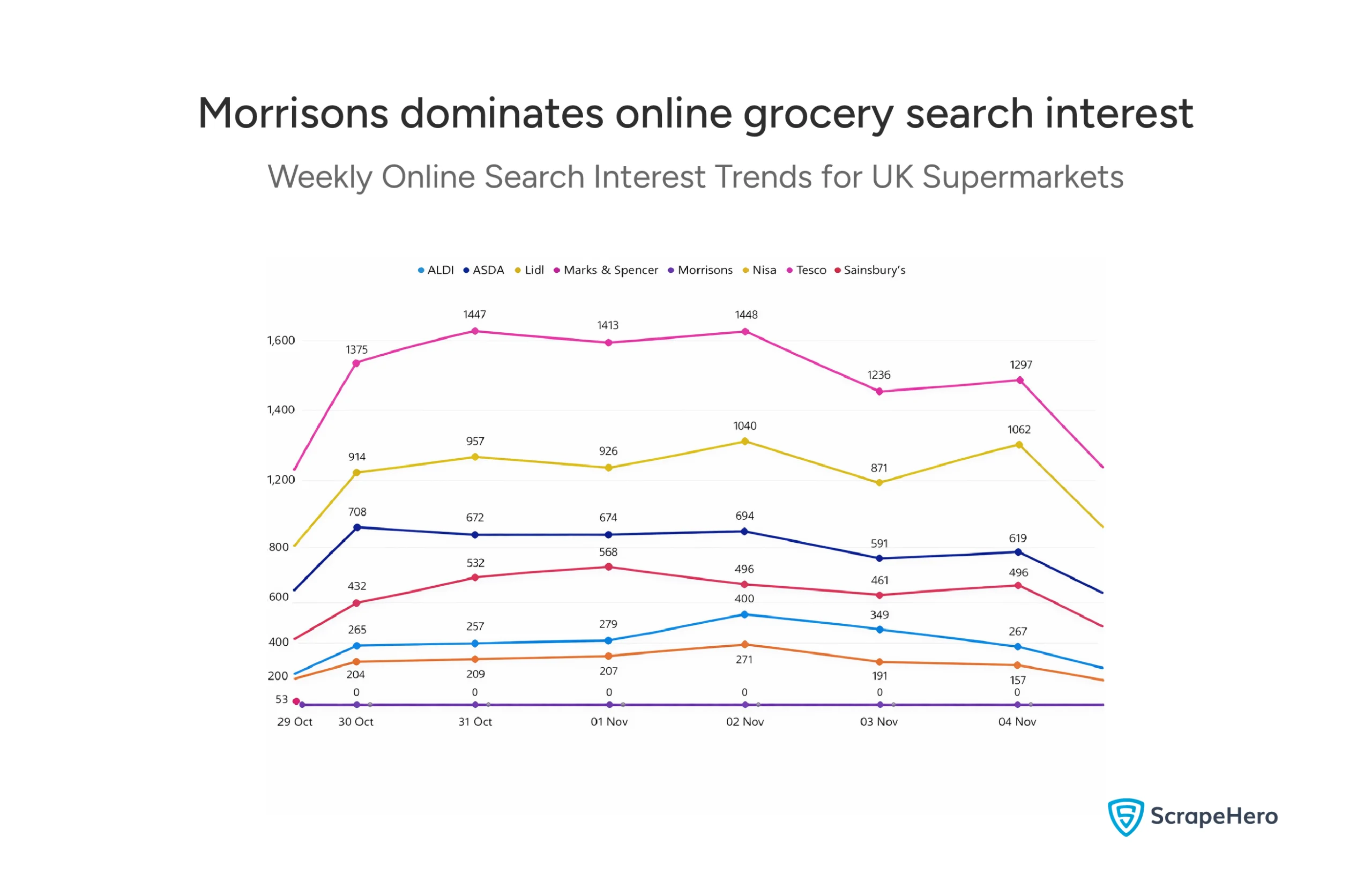
Consumer behavior is increasingly dictated by digital intent. During late 2025, search data revealed clear shopping cycles and a divide in online brand strength.
- Peak Activity: A significant spike in search interest occurs between Day 2 and Day 5, aligning with weekend shopping preparation.
- Search Dominance: Morrisons maintains a high search volume throughout the week.
Digital Weakness: Conversely, Nisa shows “negligible” online search activity, indicating a potential weakness in their digital brand presence.
Conclusion: The Future of the Supermarkets in the UK Industry Analysis
Tesco remains the dominant force in the UK grocery market, leading in turnover, market share and store count. However, popularity ratings of over 80% for brands like ALDI and Marks & Spencer show that market size does not always equal consumer affection.
The rise of discounters and the clear geographic gaps in regions like Northern Ireland suggest the landscape is still ripe for disruption.
- Tesco wins on turnover, market share and store count.
- ALDI and Marks & Spencer win on public sentiment and likability.
- ALDI and Lidl continue expansion in key cities.
Interested in a Similar Analysis?
The reality is that a comprehensive analysis of any industry requires clean public data at scale. You will need store counts in every state, pricing from multiple e-commerce platforms, product category breakdowns, customer ratings, etc., all current, accurate, and structured for analysis.
That is why a web scraping service is the best way forward.
Instead of manually visiting hundreds of store locator pages or checking prices across platforms, the data arrives ready for analysis when you partner with a fully managed web scraping service like ScrapeHero.
For businesses that need market intelligence, ScrapeHero handles the heavy lifting: navigating complex websites, extracting data at scale, ensuring accuracy, maintaining updates, and delivering information in usable formats.
No software to install, no technical expertise required, no time spent on data collection.
The alternative, building an in-house scraping operation or manually gathering data, means diverting resources from what actually matters: analyzing the market and making strategic decisions.
When you need data effortlessly, outsourcing to a specialized web scraping service is simply the smarter choice. You get the insights without the infrastructure.
Frequently Asked Questions About Supermarkets in the UK
Tesco is the undisputed leader of the UK grocery market with a share of 28.3%.
The German discounters now command a combined 18.8% of the UK market. Individually, Aldi holds a 10.6% share, while Lidl has grown rapidly to reach 8.2%.
The UK grocery sector is currently divided among these major players:
Tesco: 28.3%
Sainsbury’s: 15.3%
Nisa: 11.9%
Asda: 11.8%
Aldi: 10.6%
Morrisons: 8.3%
Lidl: 8.2%
Marks & Spencer: 4.2%
While traditional giants like Tesco lead in turnover, discounters like ALDI and Lidl show notable expansion in cities like Bristol, Liverpool, and Manchester.
In ScrapeHero’s supermarket industry analysis, we found that London has the highest density of stores, with Tesco alone operating 335 locations, nearly seven times more than its closest competitor, Sainsbury’s.
Six major supermarkets (Tesco, Morrisons, Sainsbury’s, ASDA, ALDI, and Marks & Spencer) have successfully scaled to more than 1,000 stores across the UK.